
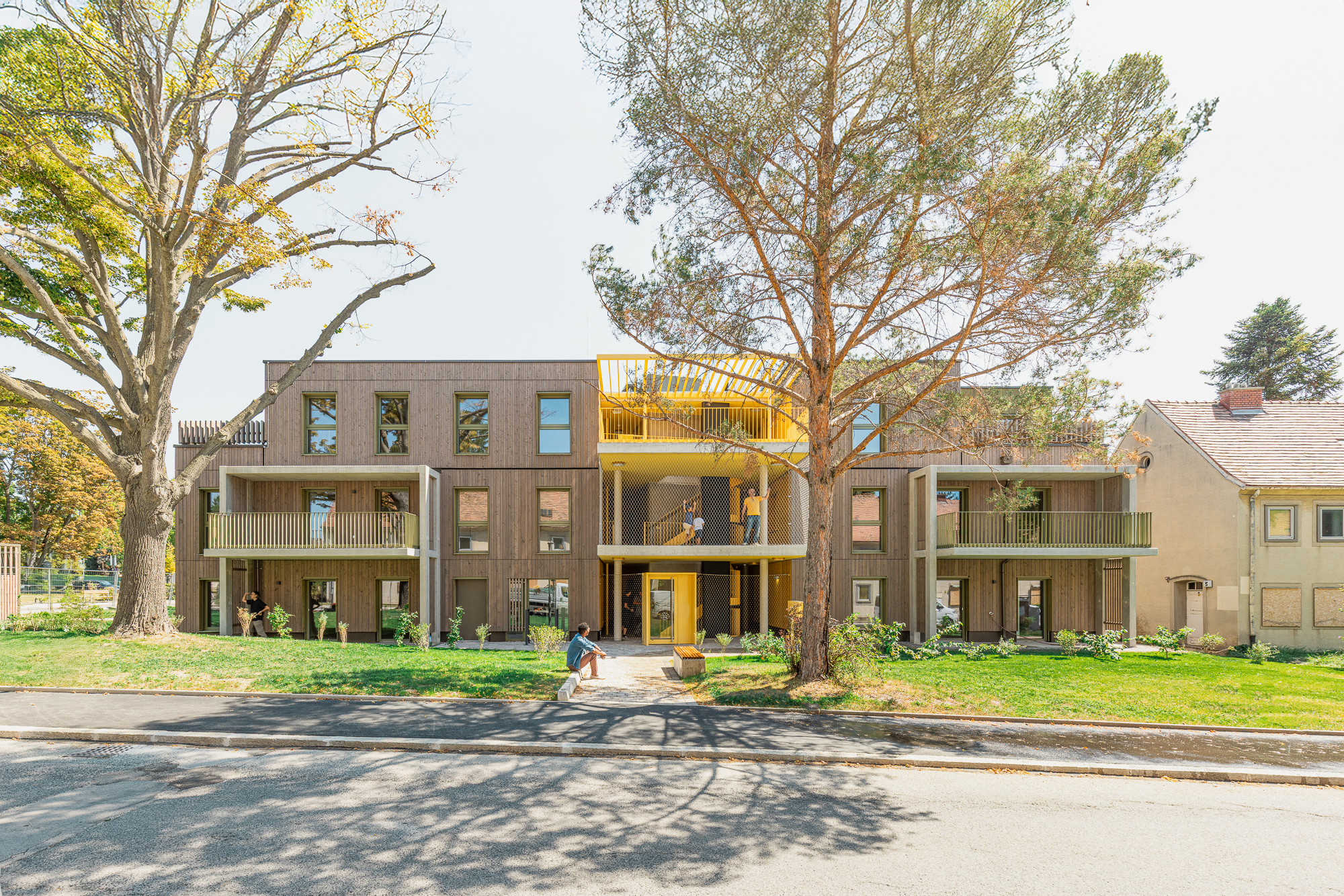
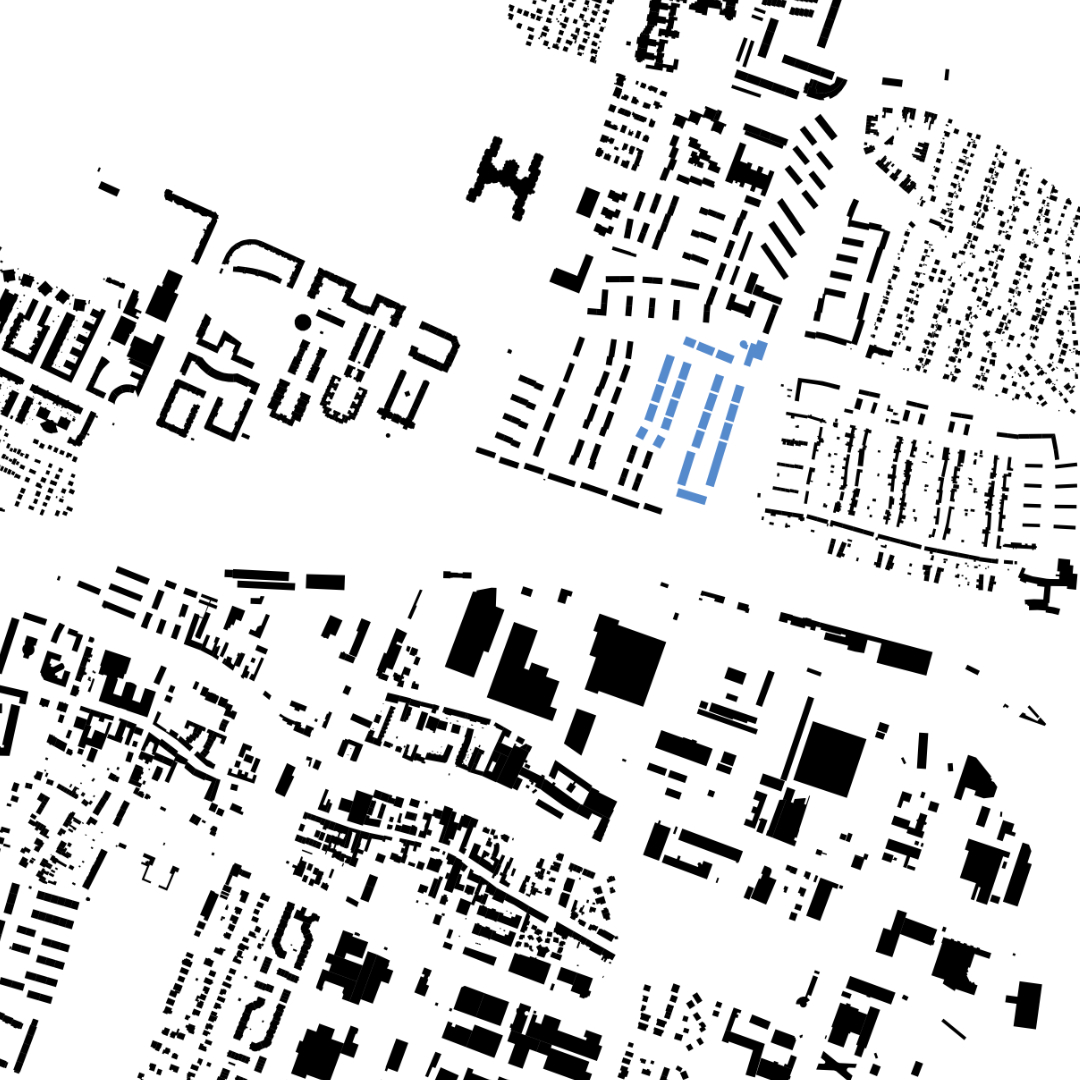
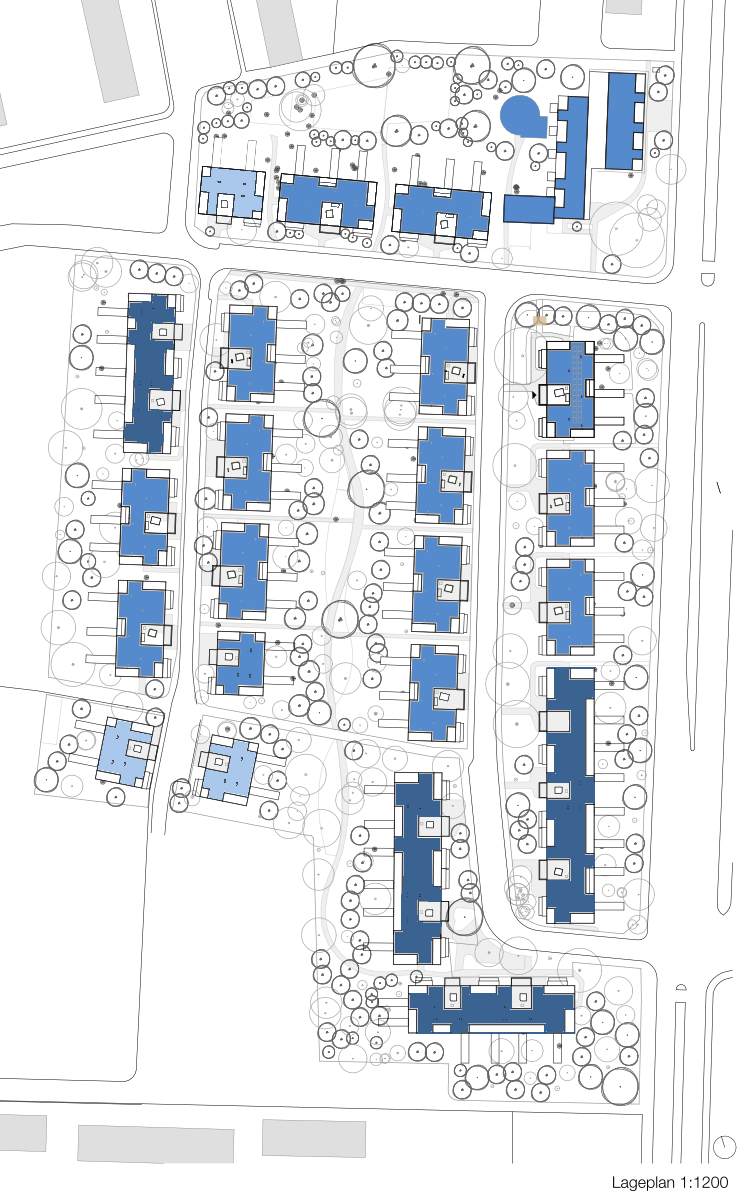
settlement 'Am Wienerfeld West'
competition 1st place
house D1 completed
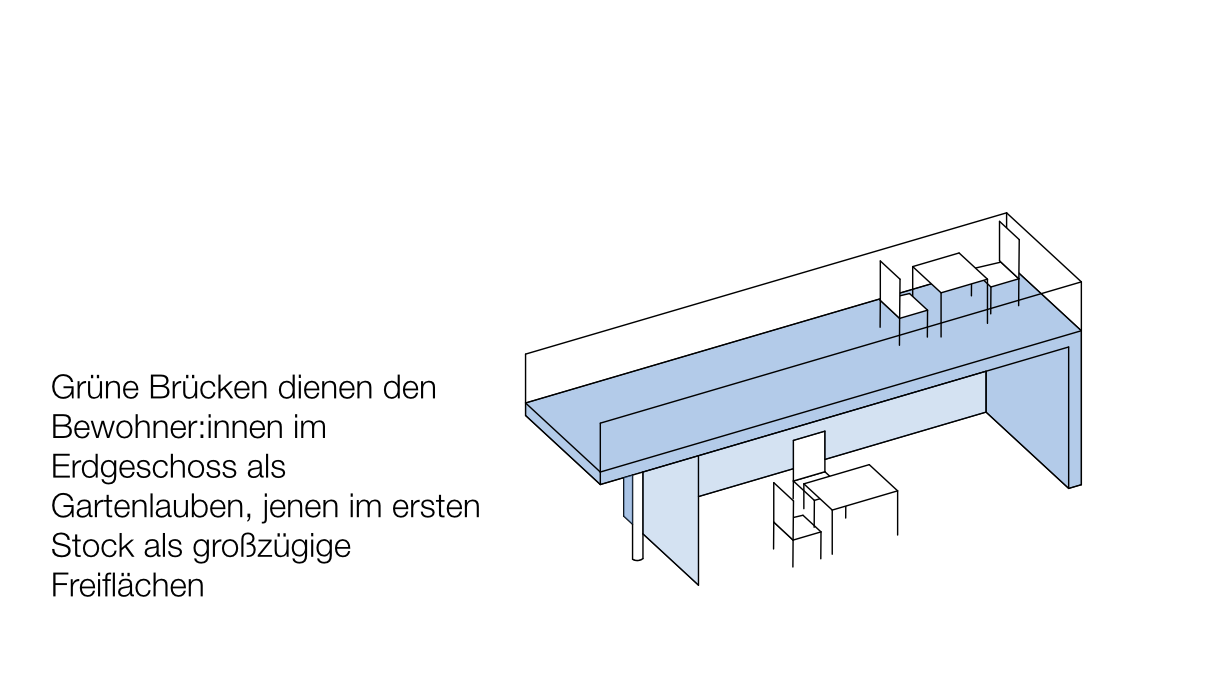
„A “Gemeinschaftsbassena” as a communication and access zone promotes small-scale neighborhoods - walk-in planting pots (“green bridges”) serve as spacious gardens for the residents on the first floor
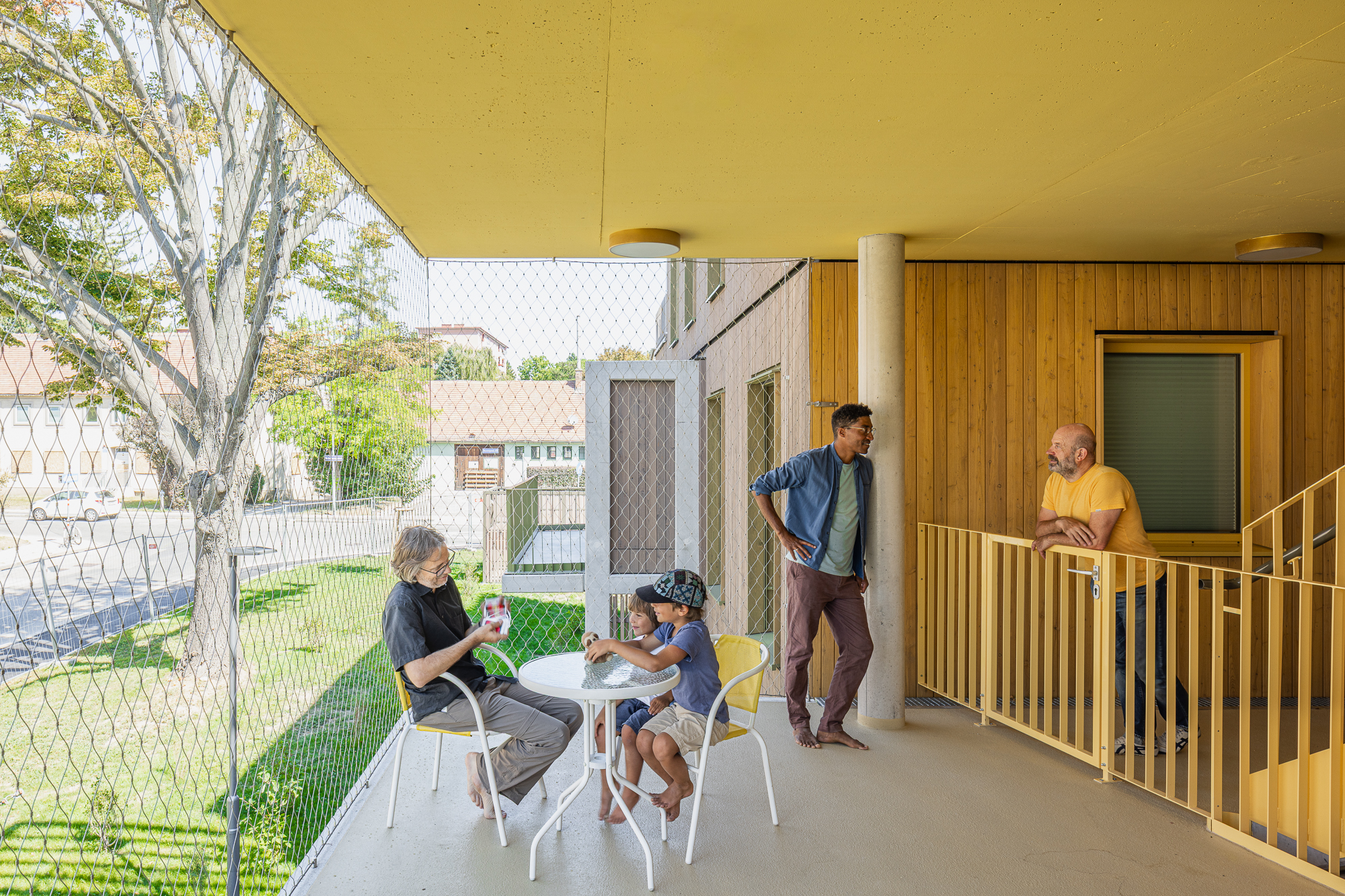
"Gemeinschaftsbassena" as a meeting point
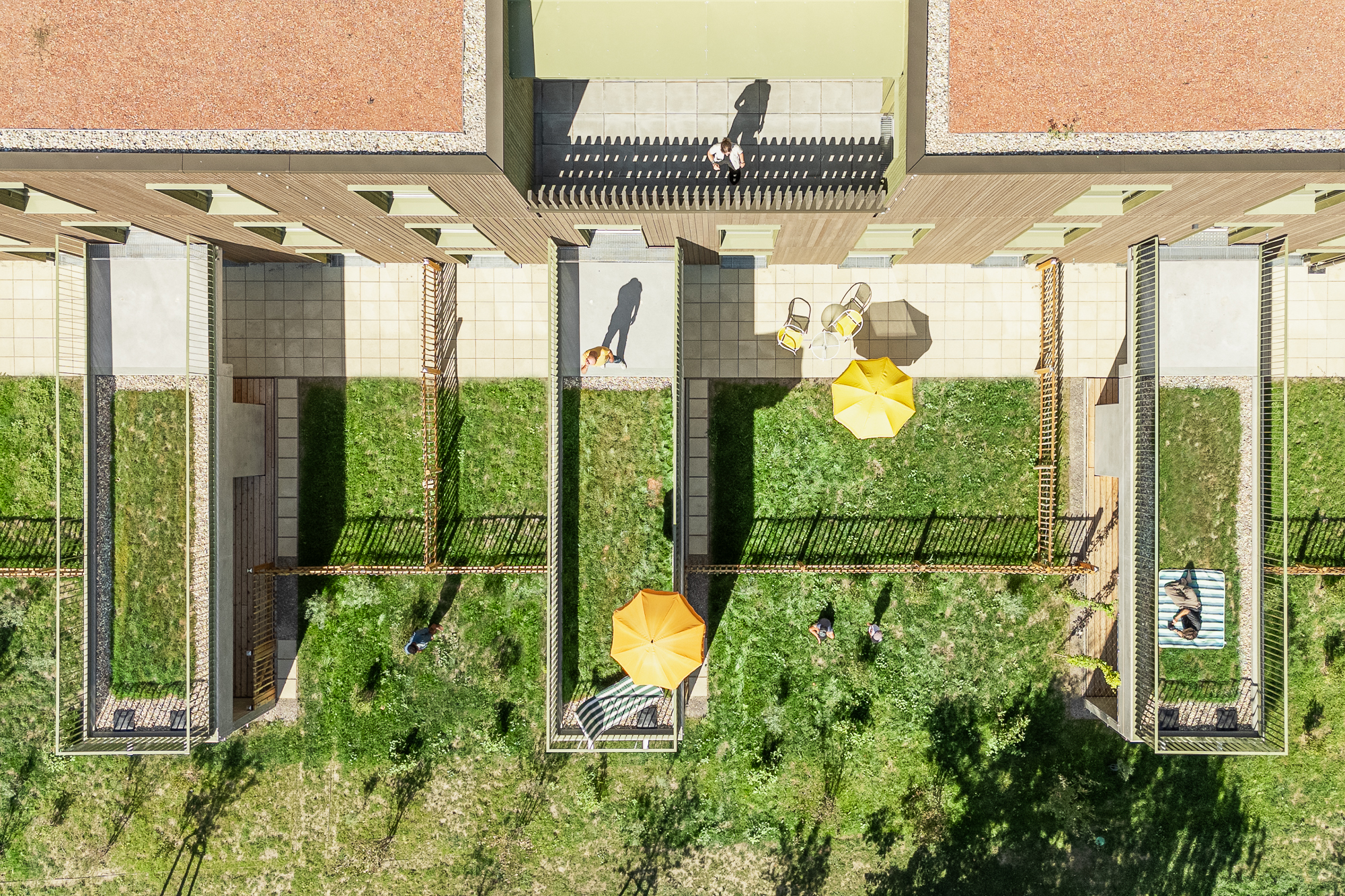
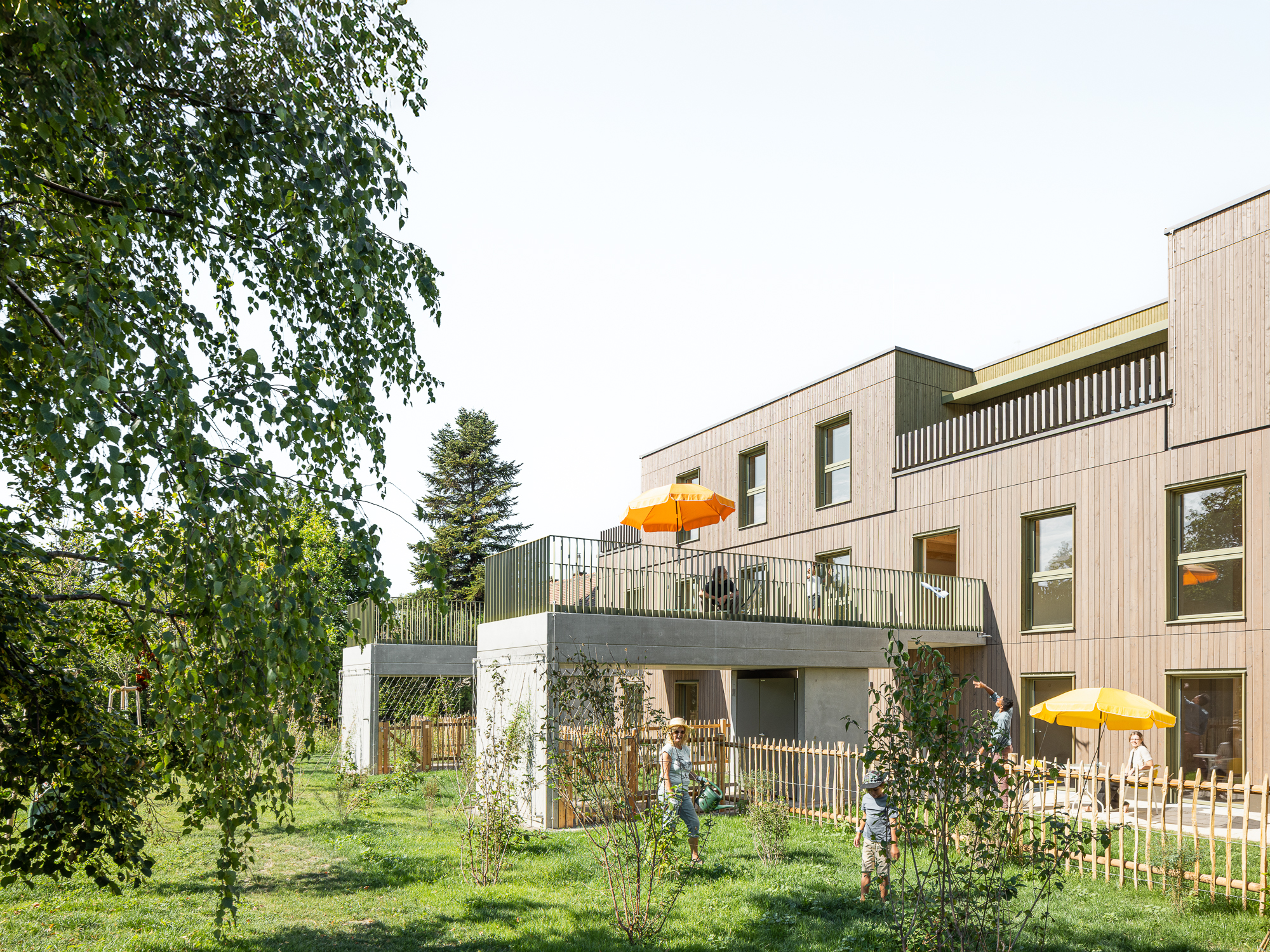
green bridges as arbors on the ground floor and gardens on the first floor
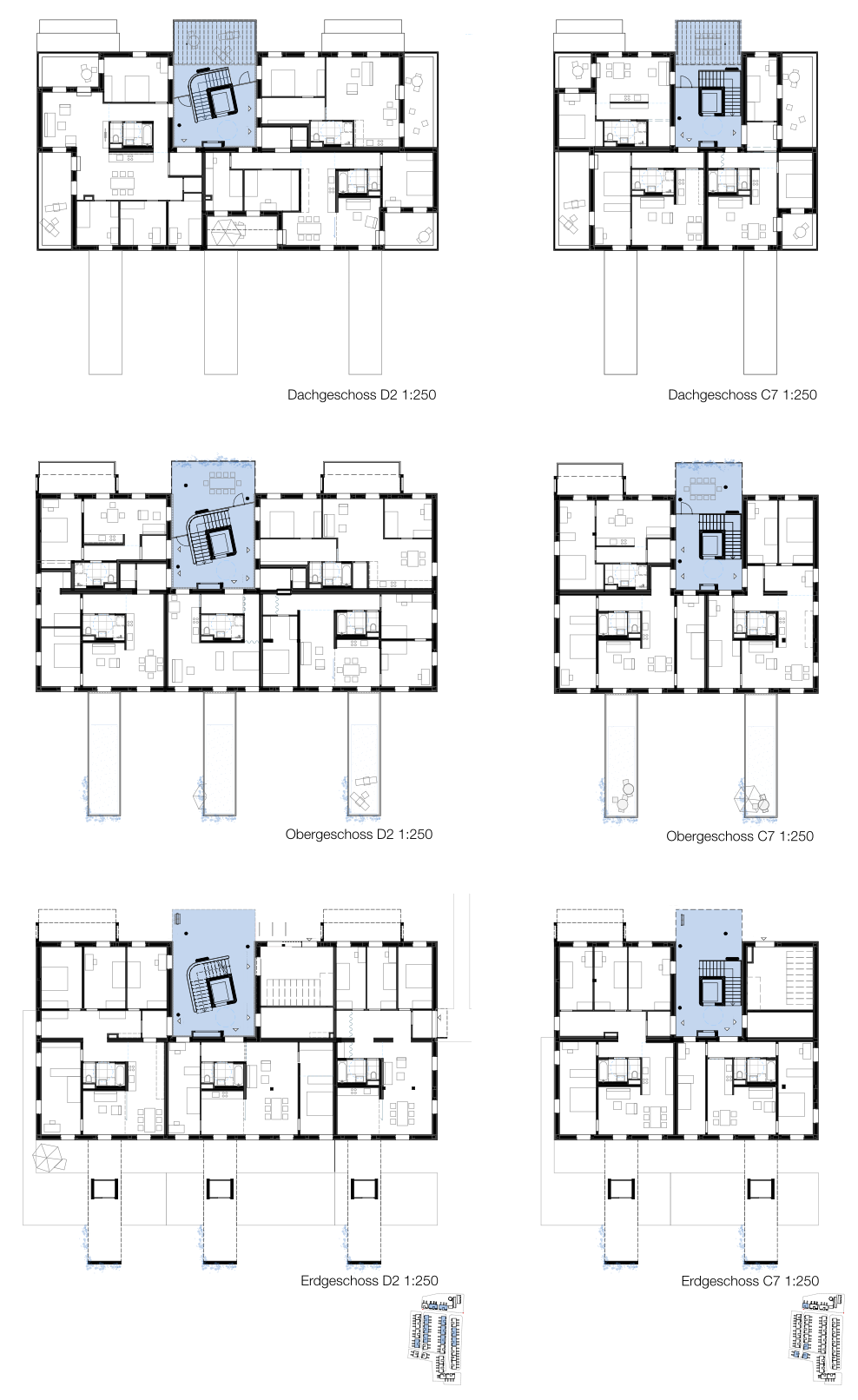
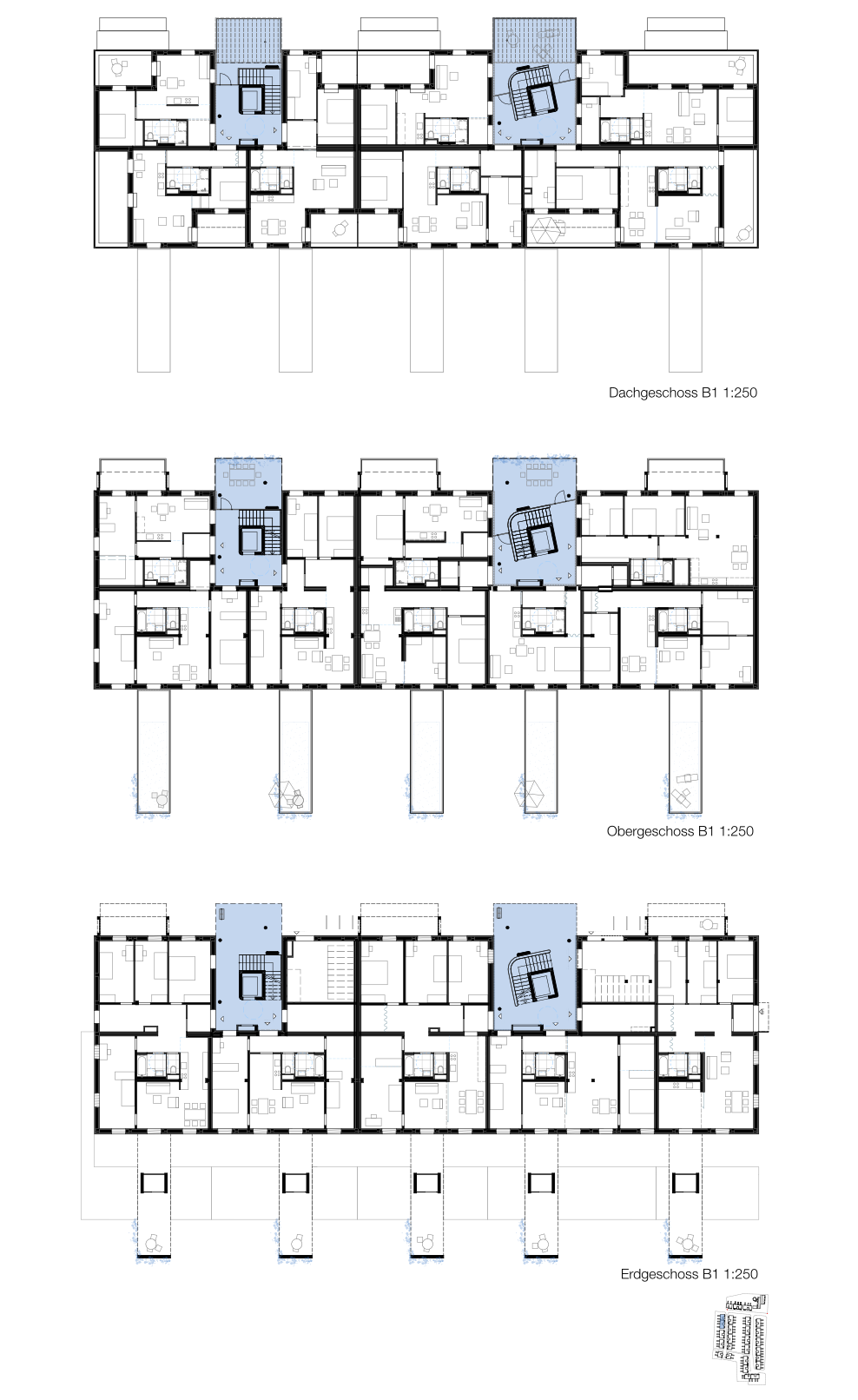
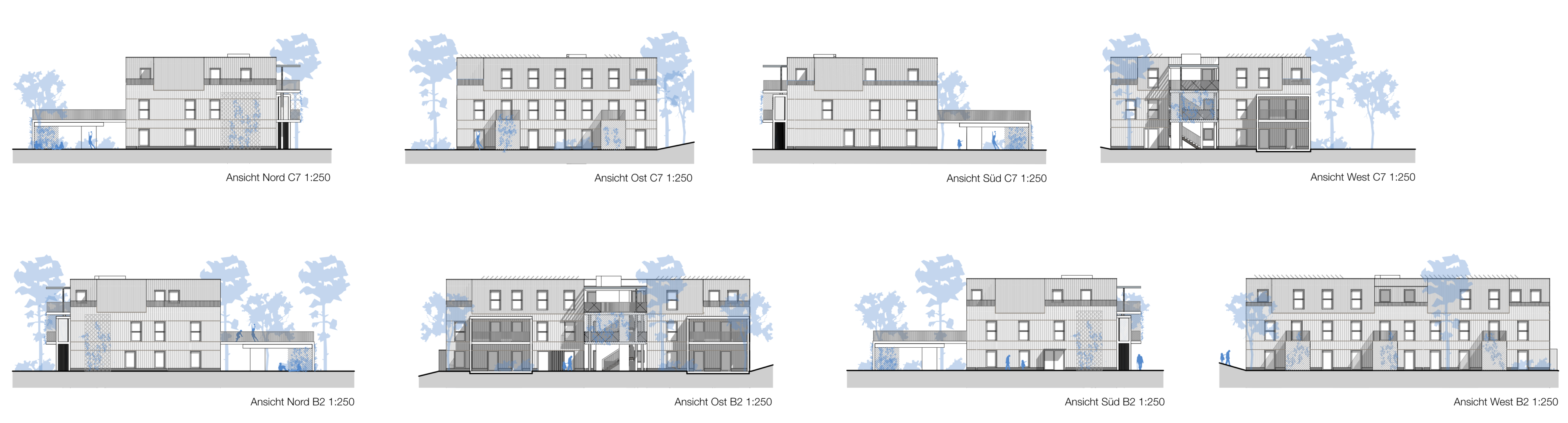
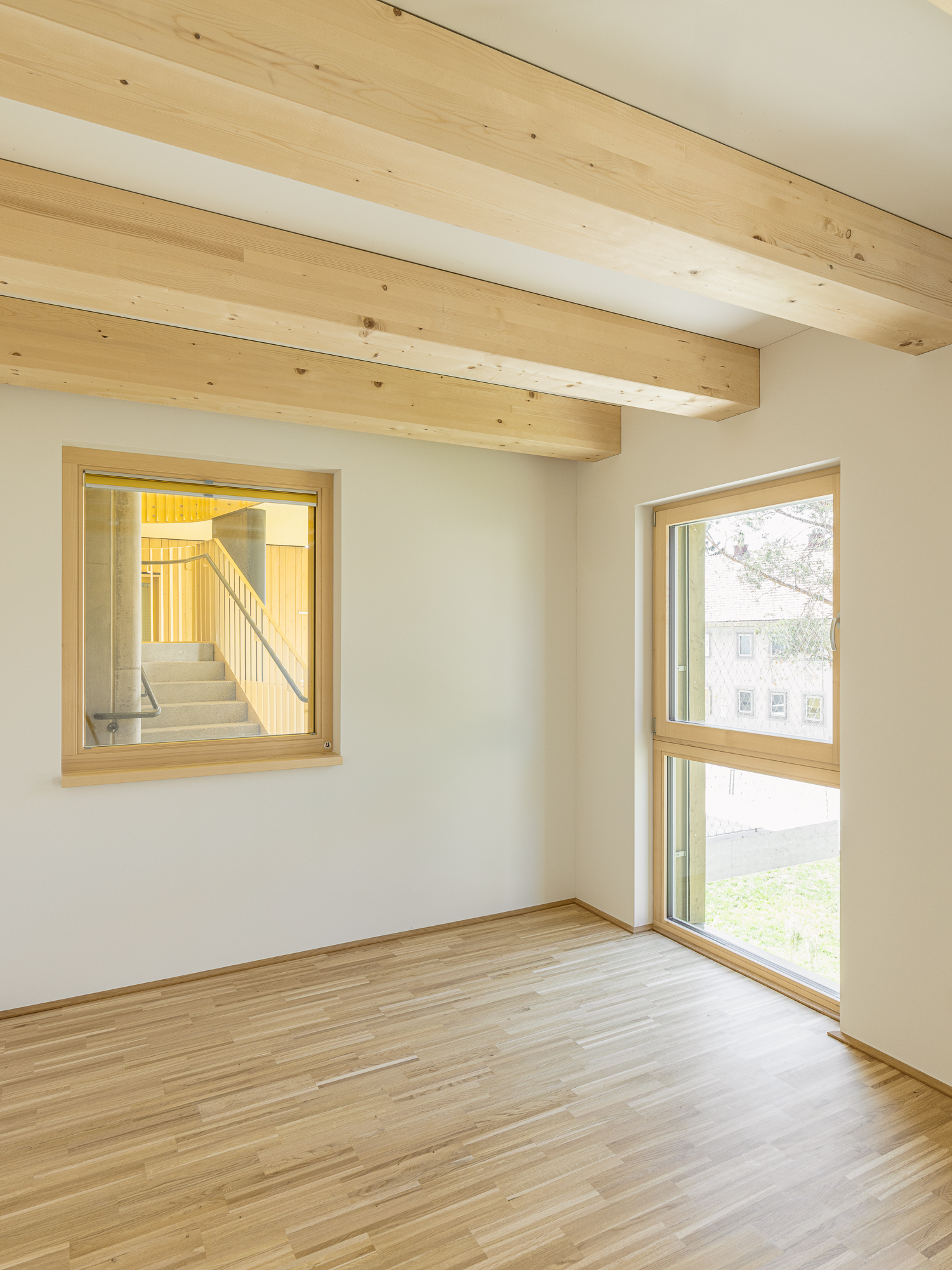
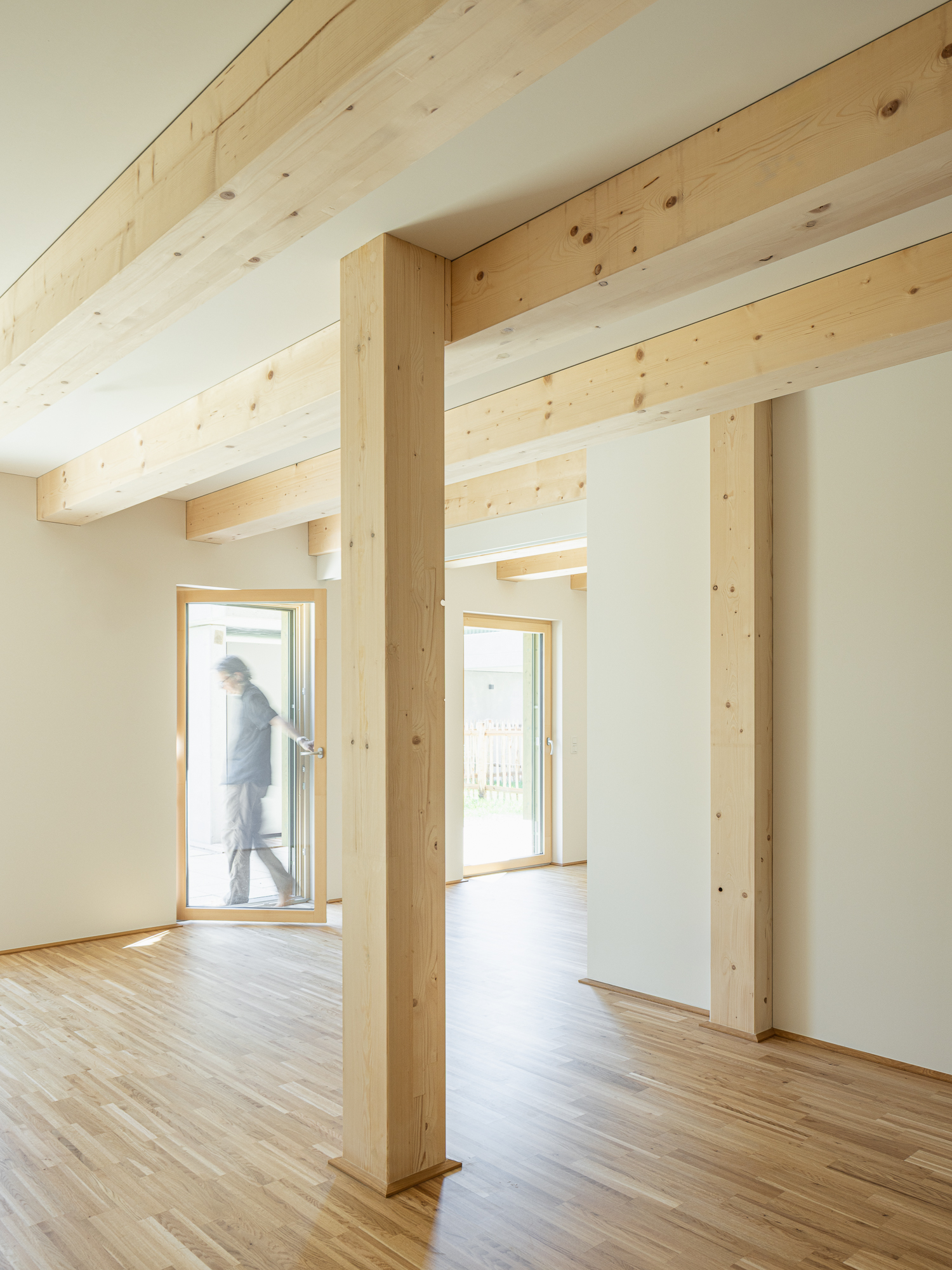

This development is based on compact, prefabricated residential buildings constructed using a hybrid timber construction method. Essentially, only two types of houses are arranged on the building sites and combined with each other. The development will be constructed in several phases. In phase 1, the larger of the two house types with eleven flats will be built on construction site D1.
The flats will be accessed via a “communal bassena” – a combination of stairwell and communal areas. This access area will serve as an overarching communication zone and promote small-scale neighbourhoods, providing space for a large communal table, garden beds or a neighbourhood party. Three to four residential units per floor create the ideal conditions for functioning floor communities, while eleven flats on the “bassena” are ideal for forming house communities.
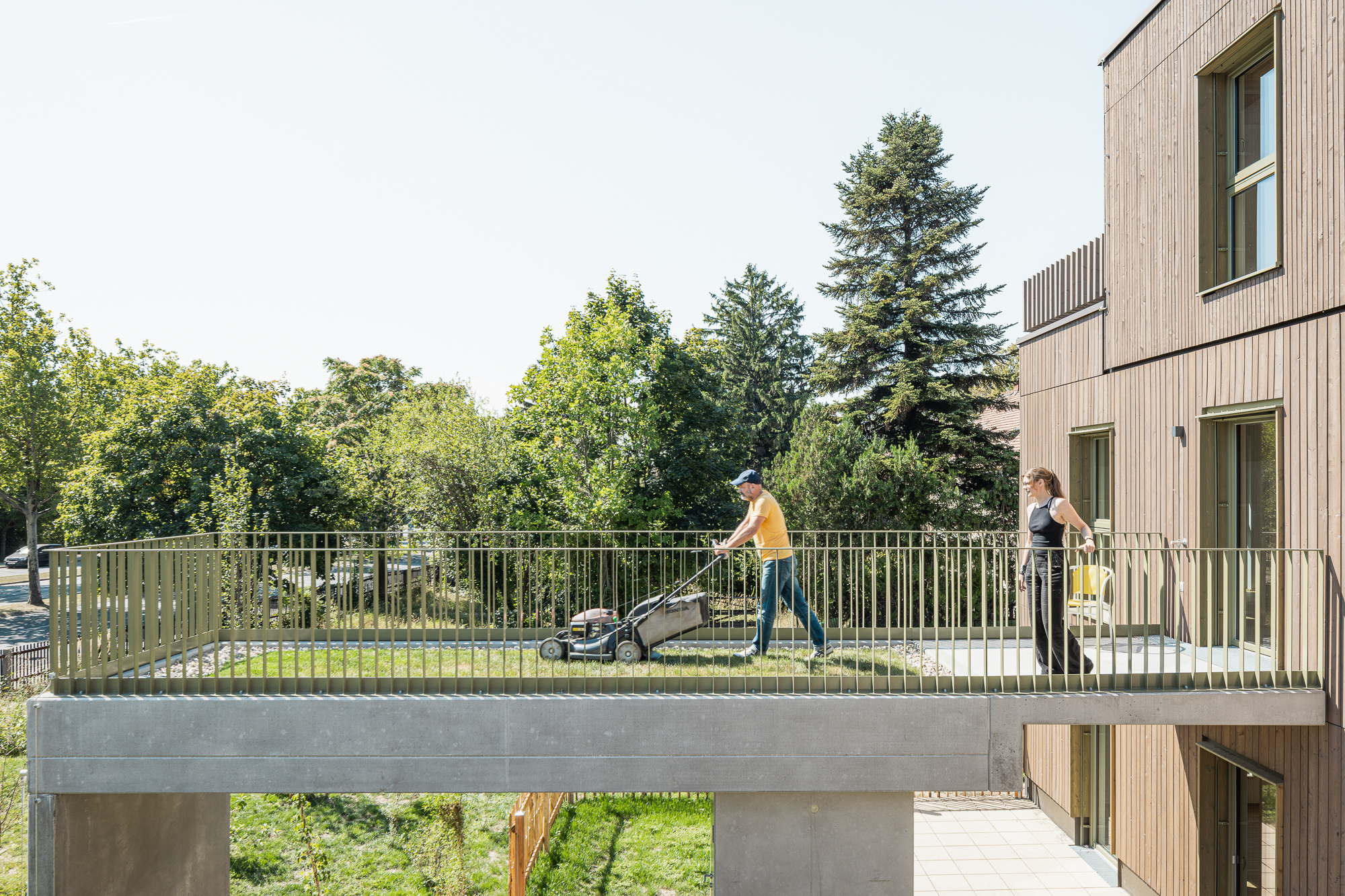
On the garden side, the houses are fronted by ‘green bridges’. These structures serve as pavilions for the residents of the ground floor and as spacious open areas that can be used as gardens for those on the first floor. The wooden components are structurally separated from the “Gemeinschaftsbassena” and the “green bridges”. This greatly simplifies the timber construction and allows the development to be designed without complicated connection details.
The use of fully prefabricated components enables a very short construction time and, due to the very high repetition factor of the individual building elements, also an extremely economical construction method. The building, constructed using a wood/wood hybrid construction method, is built on a reinforced concrete basement. An intelligent hybrid construction method thus enables the best possible use of the respective building material. The storage mass and favourable load-bearing behaviour of reinforced concrete are used for component activation of the ceilings and for the supporting structure in skeleton construction. This allows the proportion of concrete in the building to be reduced to a sensible minimum, while the exterior wall surfaces are constructed using timber. The extensive use of timber elements optimally compensates for fluctuations in humidity and improves the indoor climate. Timber is also a local, renewable raw material that is resource-efficient and easy to recycle.
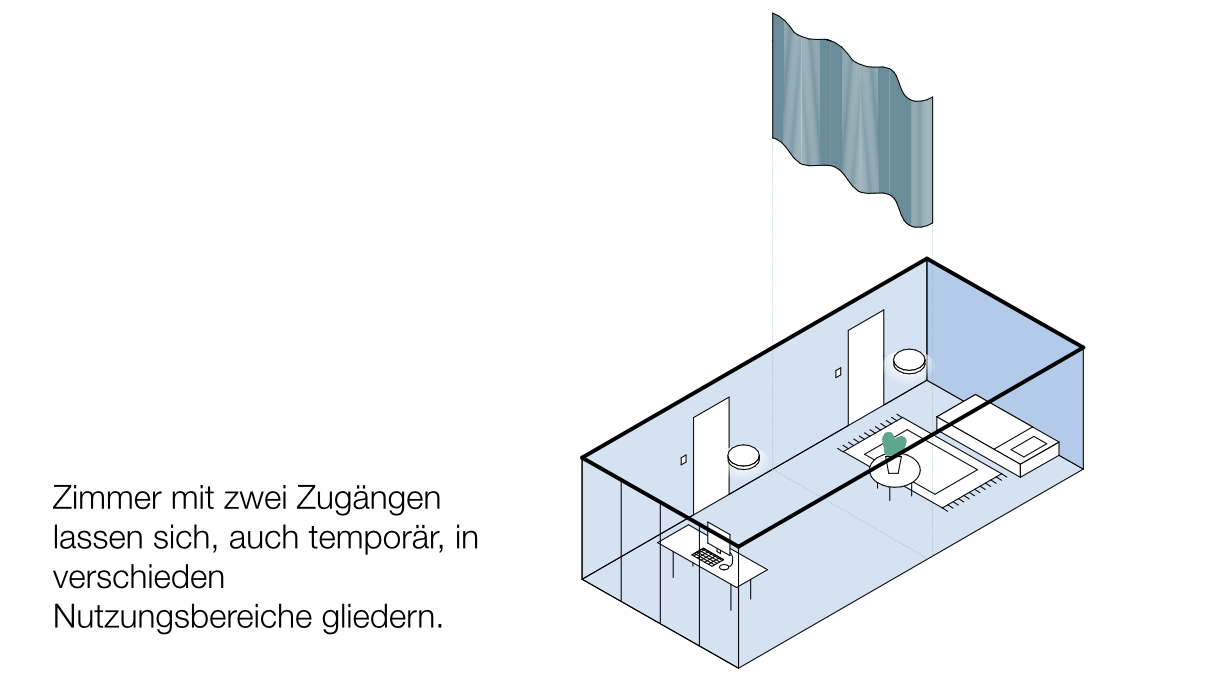
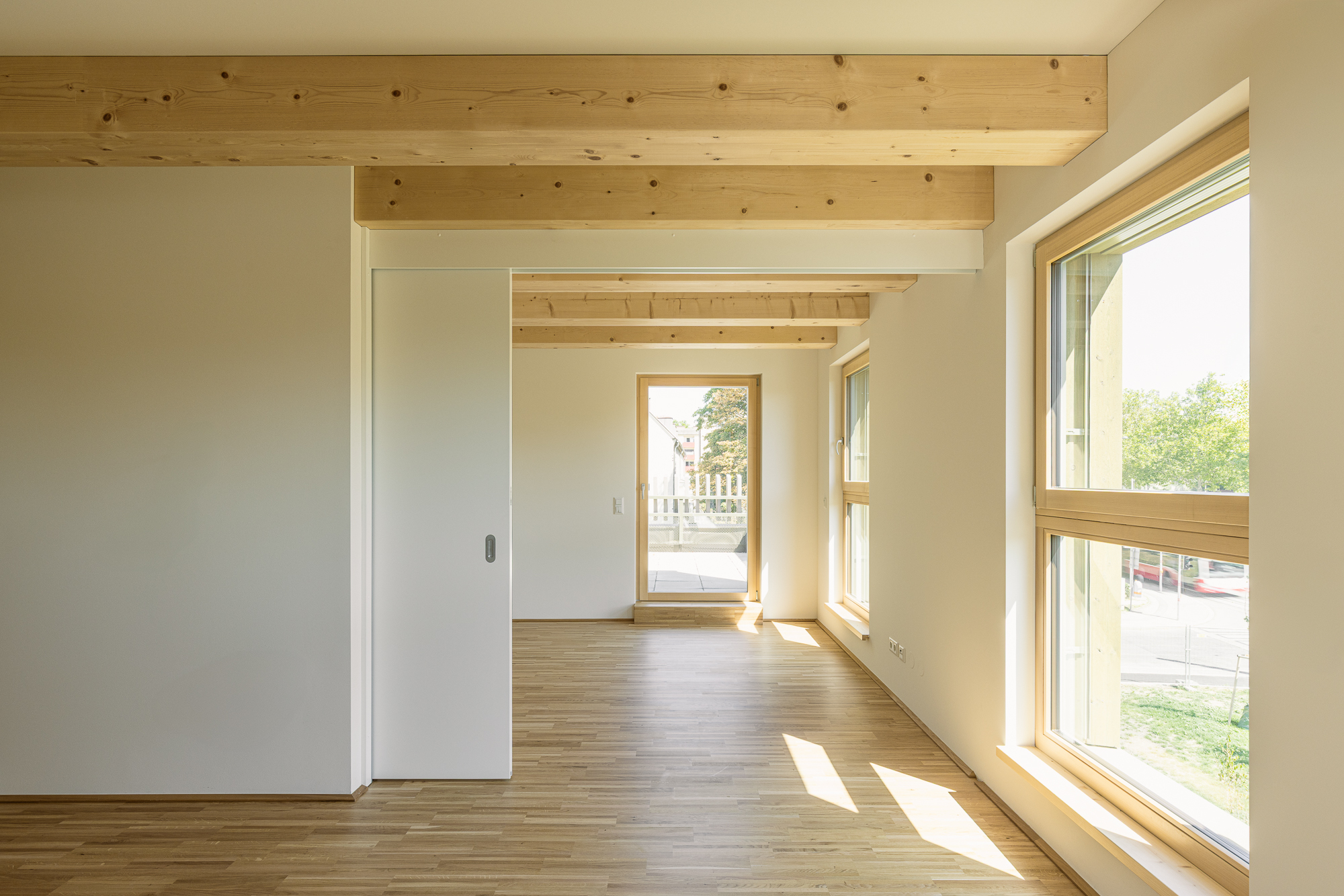
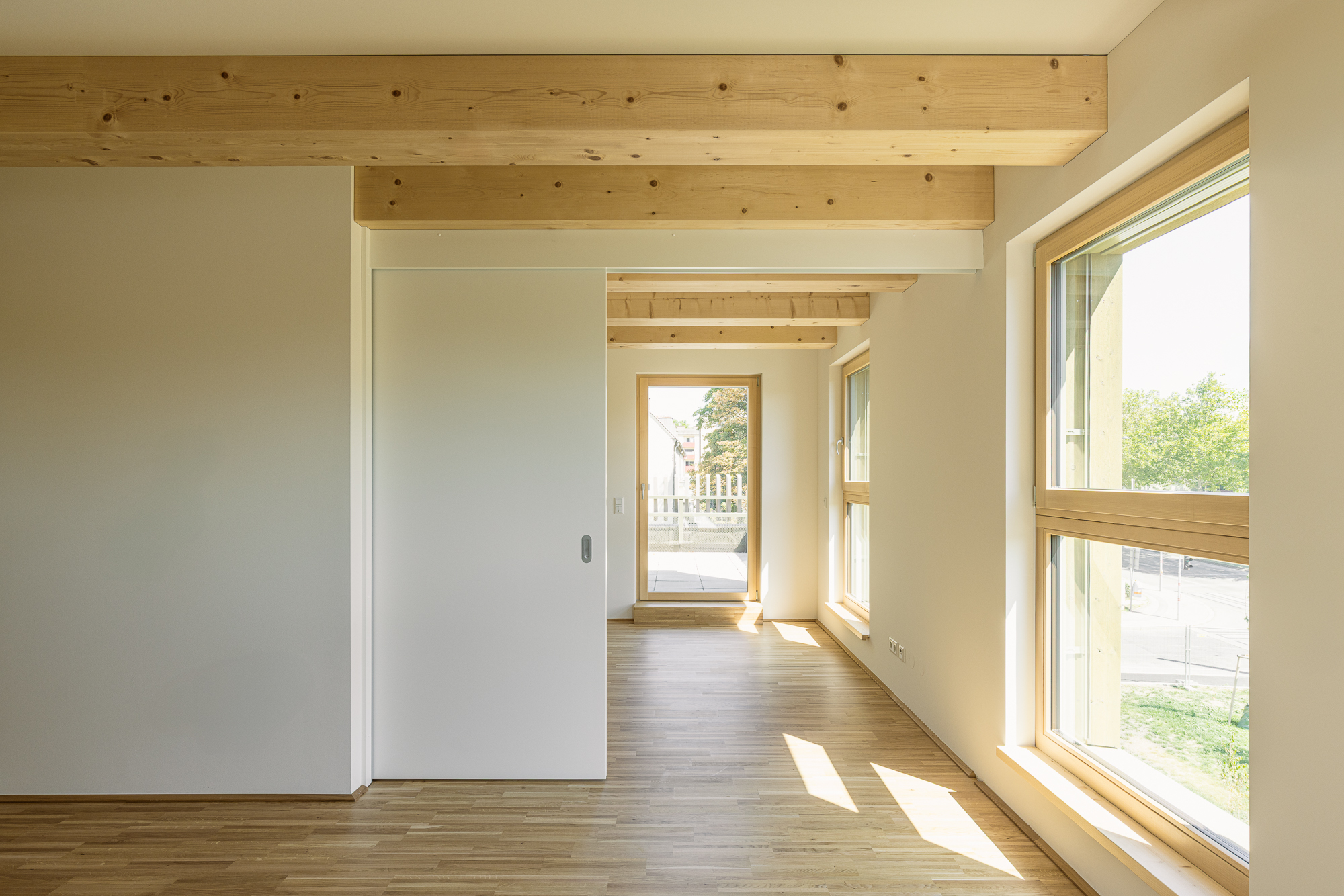
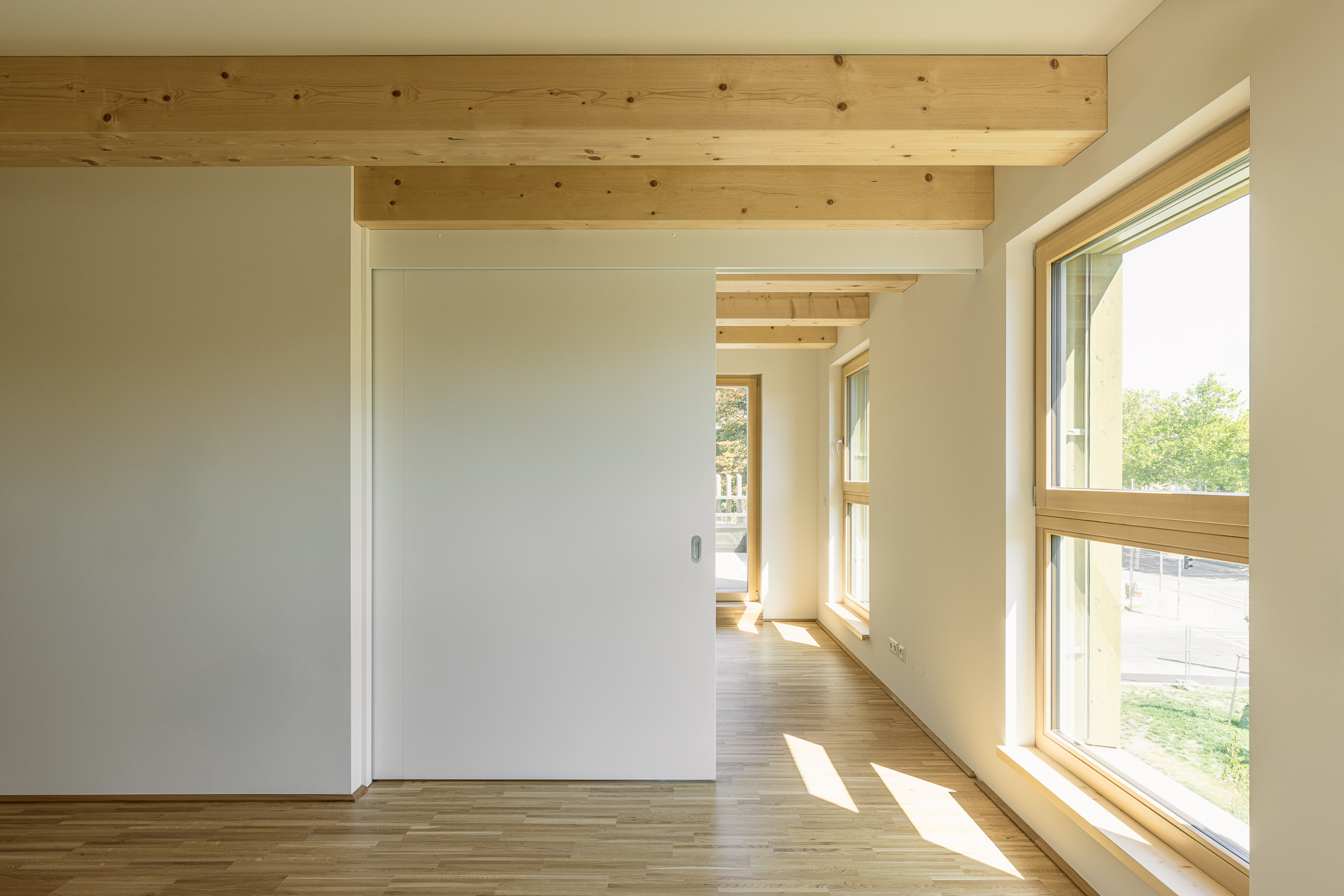
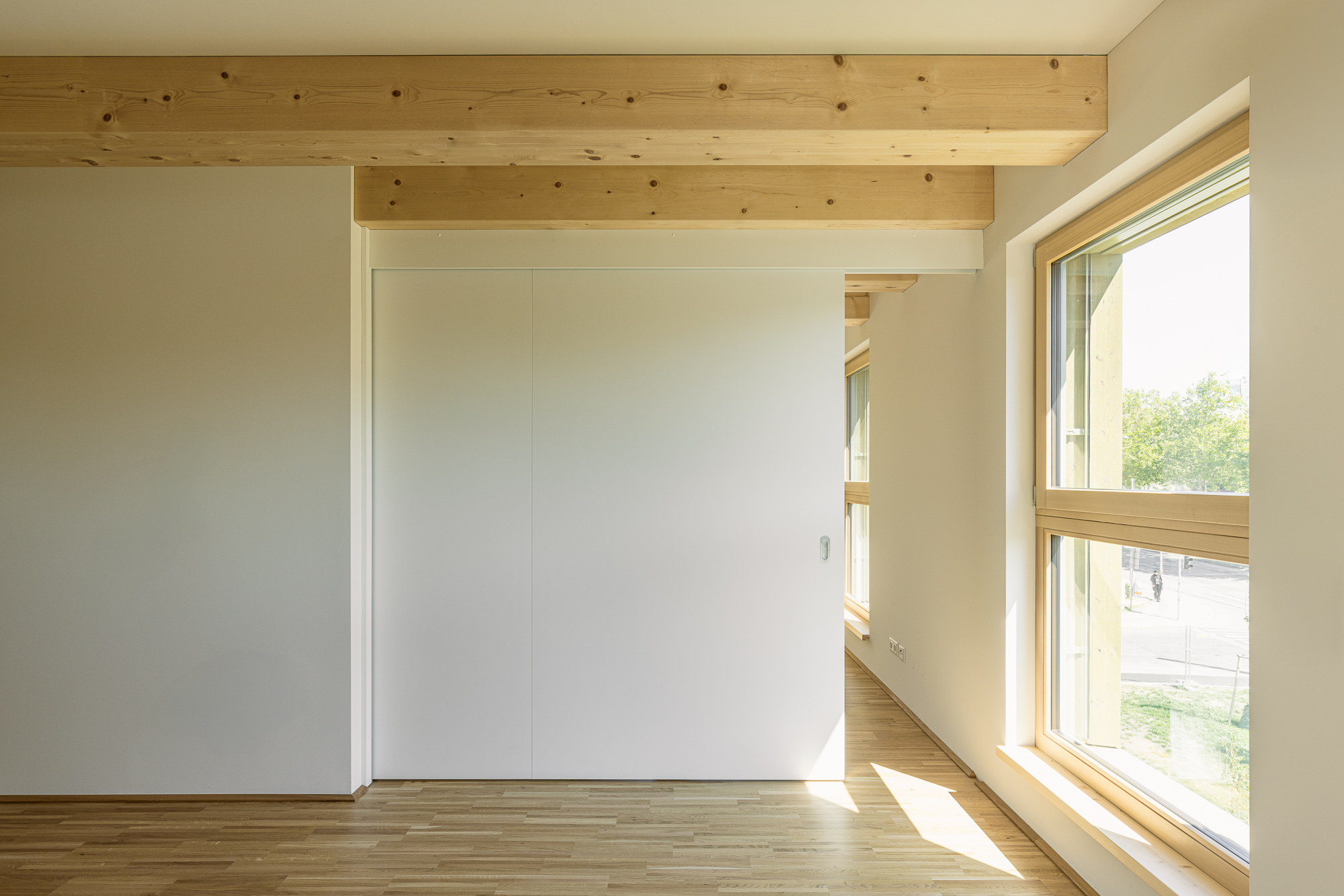
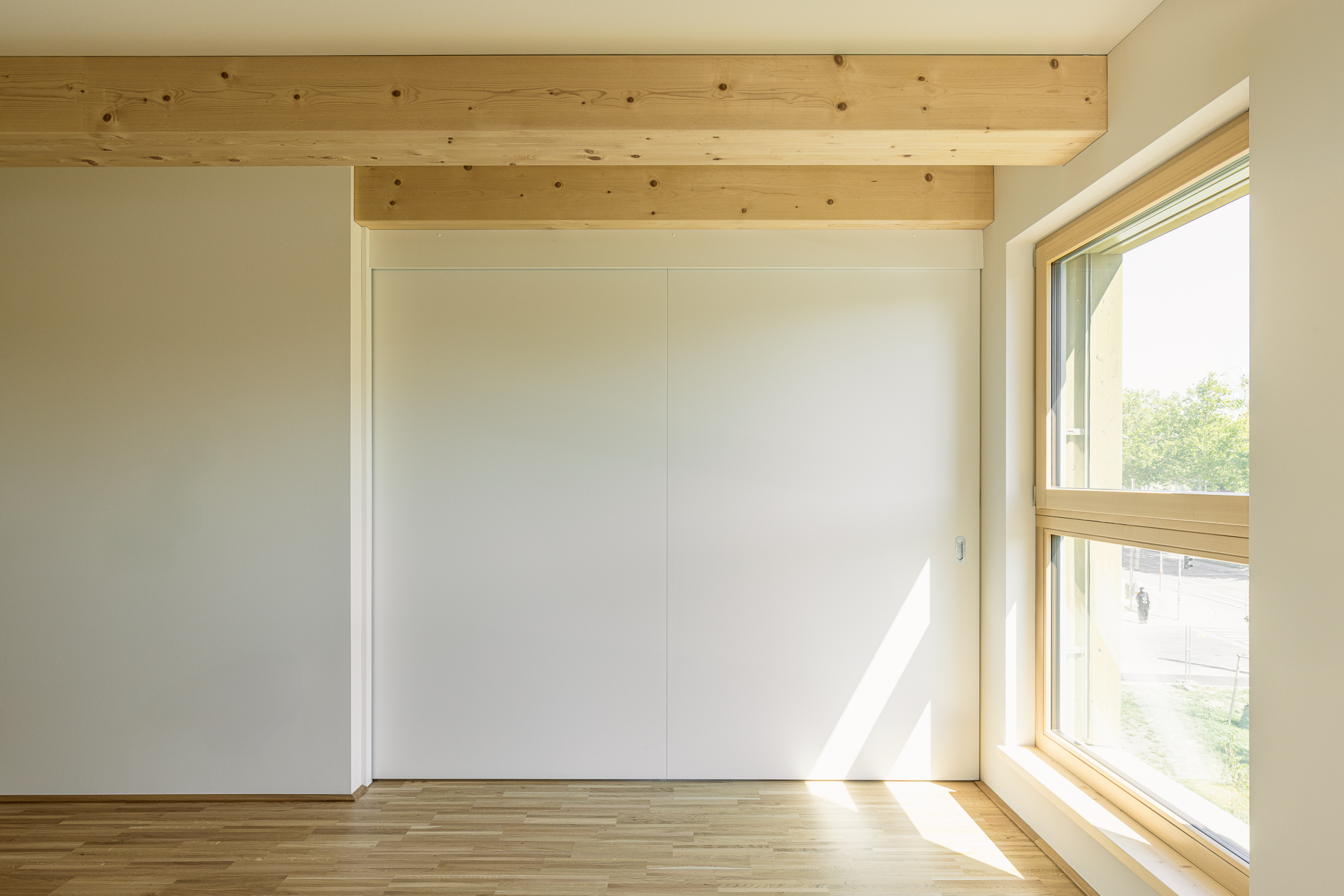
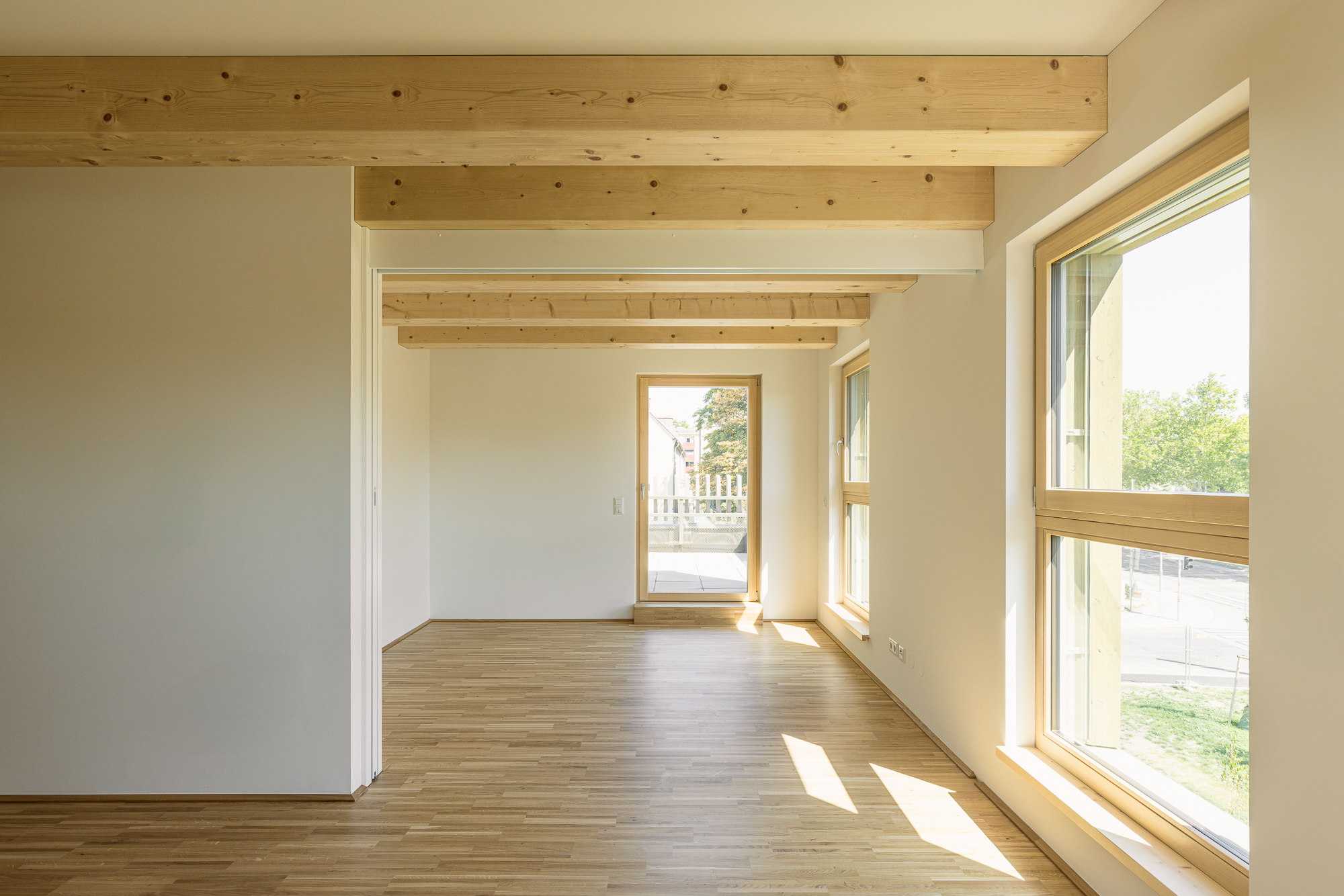
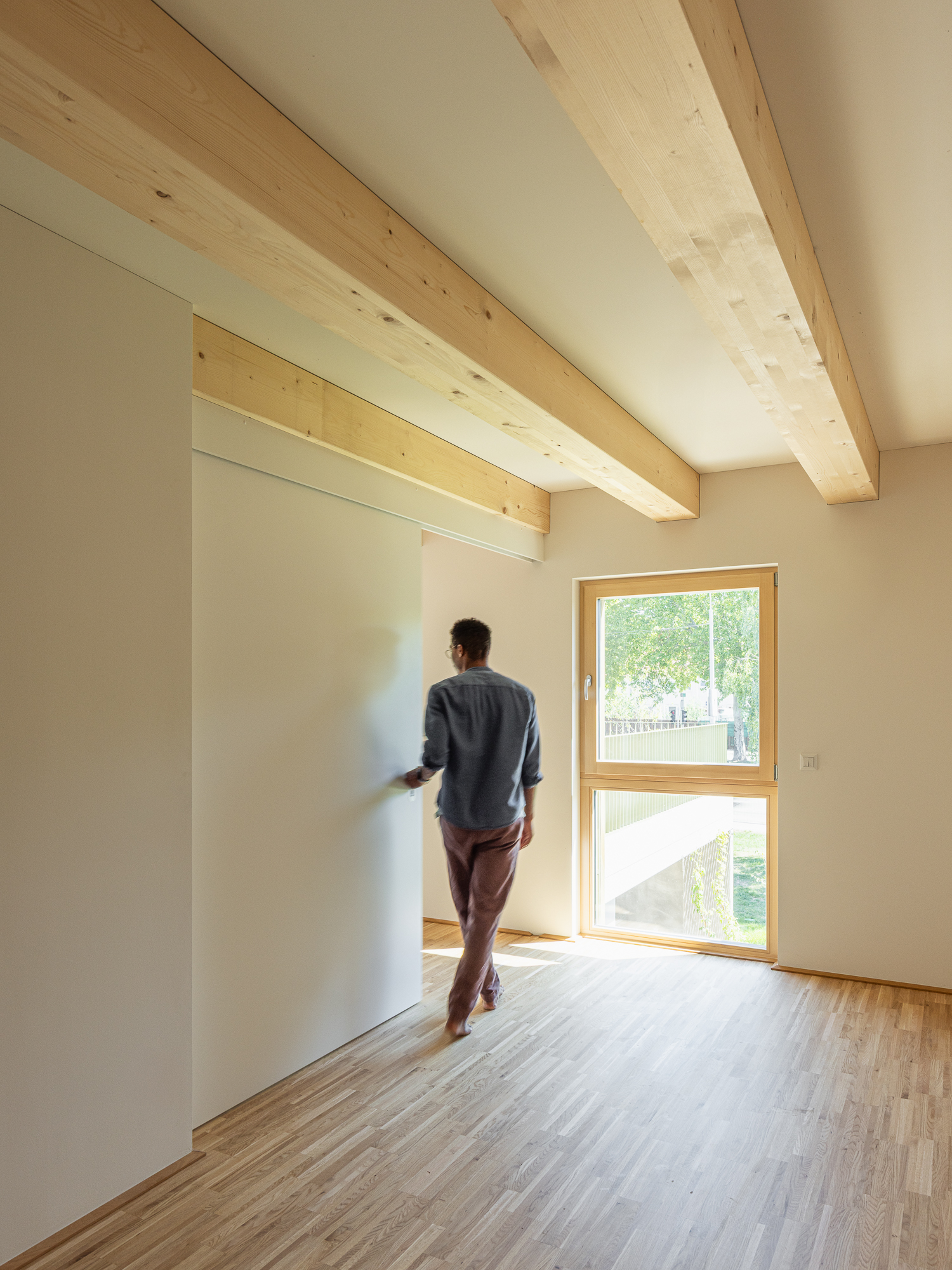
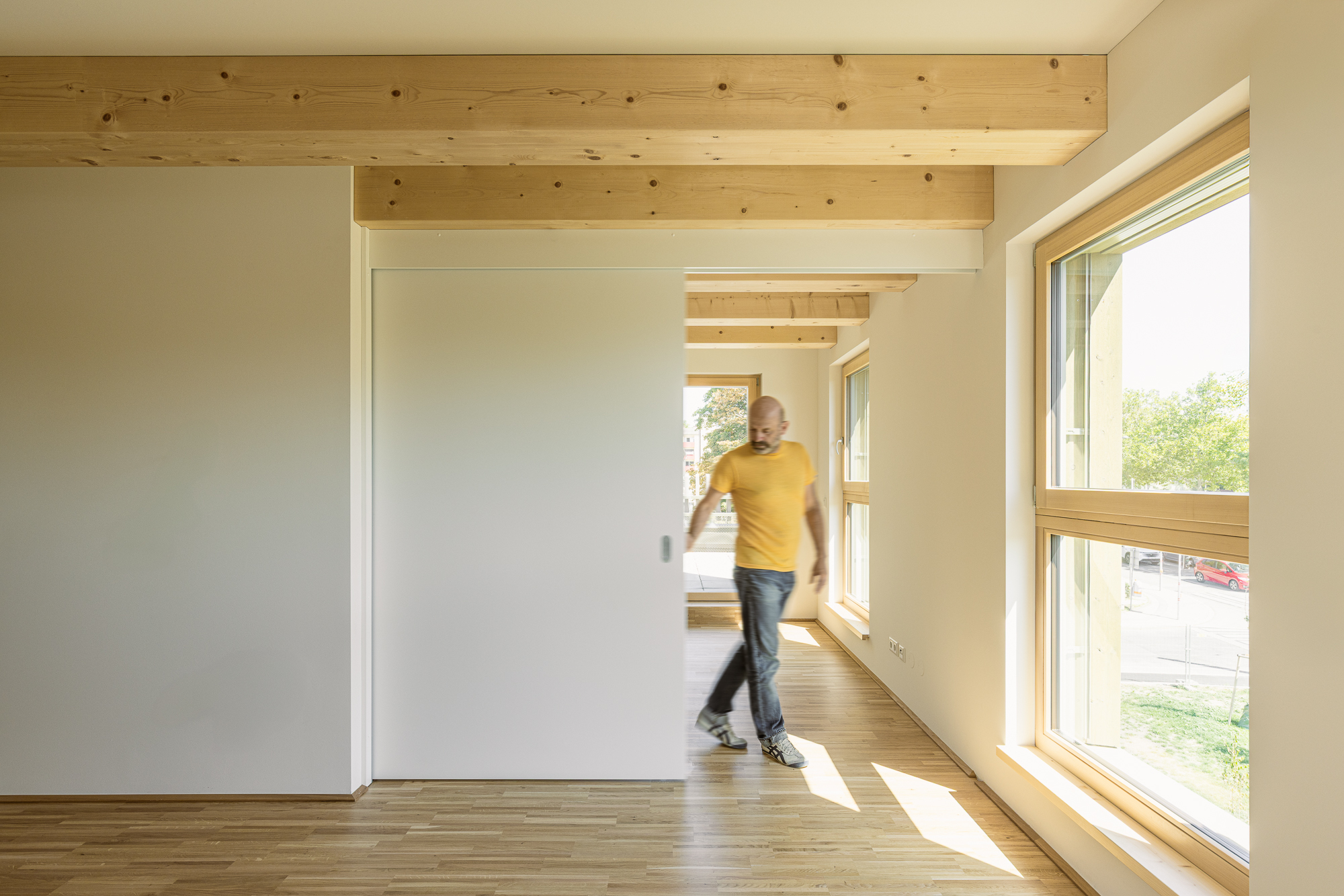
Ecological and social sustainability are central here: the apartments are suitable for long-term use thanks to their floor plans, and rooms with two entrances and sliding walls create additional usable areas within the apartment. Sufficient space for meeting areas outside the apartment door increases the community factor and promotes cooperative behaviour (swapping, sharing, mutual neighbourly help, childcare, carpooling, etc.). . In addition to the use of sustainable materials, ecological sustainability includes a short construction period, circular economy and easy dismantling, low use of grey energy, few sealed surfaces, earth cores and the creation of microclimates.
location
1100, Vienna

phase
house D1 completed
units
307 housing units, supermarket
building contractor
WIP Wiener Infrastruktur Projekt
landscape planning
DnD Landschaftsplanung
photography
tschinkersten
awards
gebaut 2025
project team
Kristina Kraml, Attila Jung, Alexander Jägers,
Jan Klinkhammer, Sara Fetzer, Stella Konietzka, Amelie Wischer
competition: Raphaela Leu, Caroline Husty, Kristina Kraml, Wenzel Witt-Dörring, Beatrice Aimee, Jan Klinkhammer