communicative development
Living doesn’t just begin at the front door – the house as a village
Access routes can and should be much more than simply a path to one’s own home. In our view, they hold great potential that is well worth exploiting in a variety of ways. Beyond their actual structural purpose, access areas can serve primarily as places for people to linger and interact, fostering accessible neighbourhoods. Pathways should deliberately intersect here, whilst thoughtfully designed access spaces offer visual connections and a variety of qualities that make them pleasant places to spend time. If such areas focus primarily on their social function, they can significantly support the emergence of vibrant communities, enhance social control, safety and security, and foster long-term social networks from which vulnerable groups, such as older people or single parents, benefit most. Ideally, such networks then extend – much like in a village – across the entire housing development. Due to these requirements, the social and communicative potential of access routes has always been, and remains, a central element of our planning work.
internal development
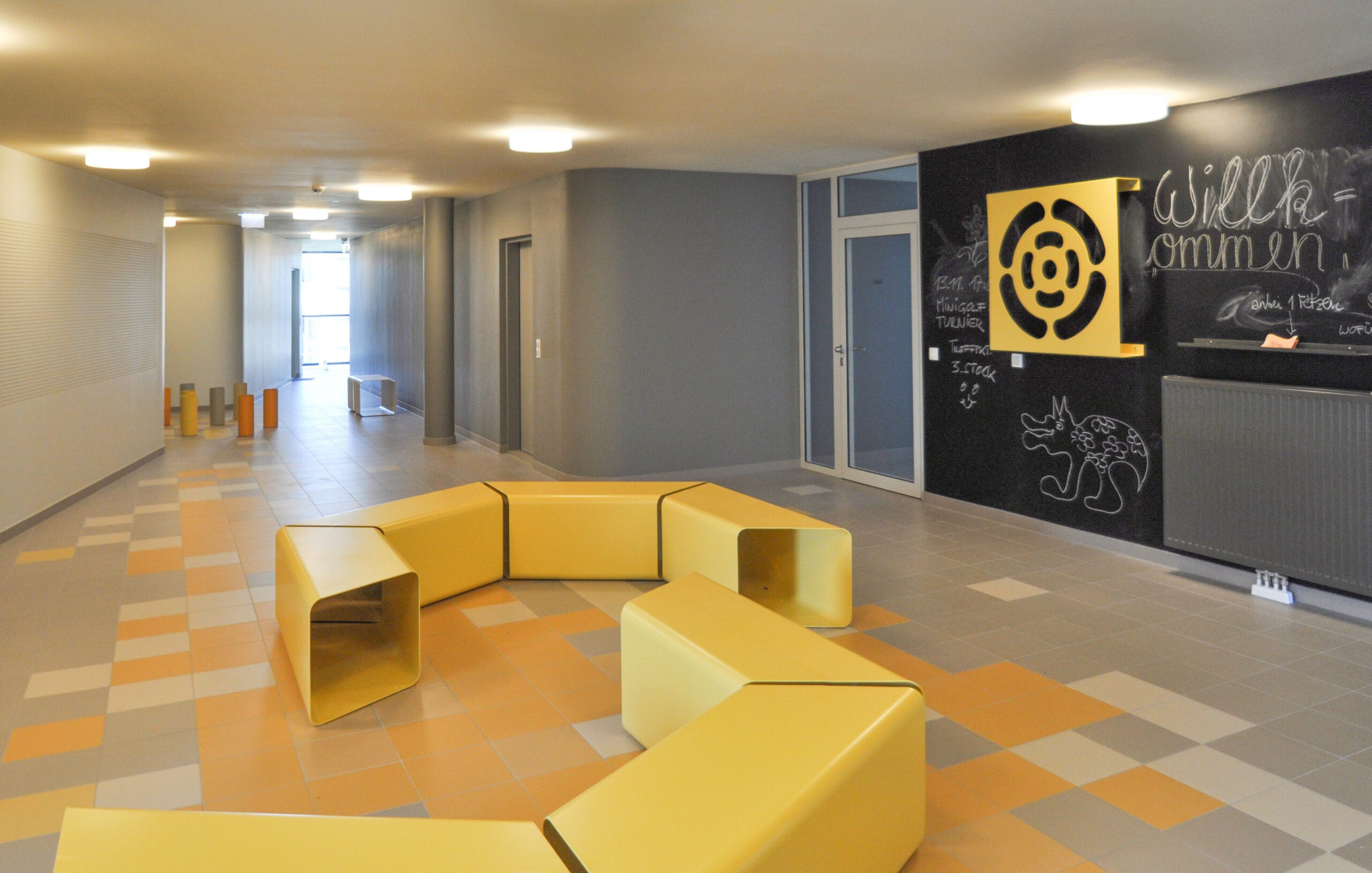
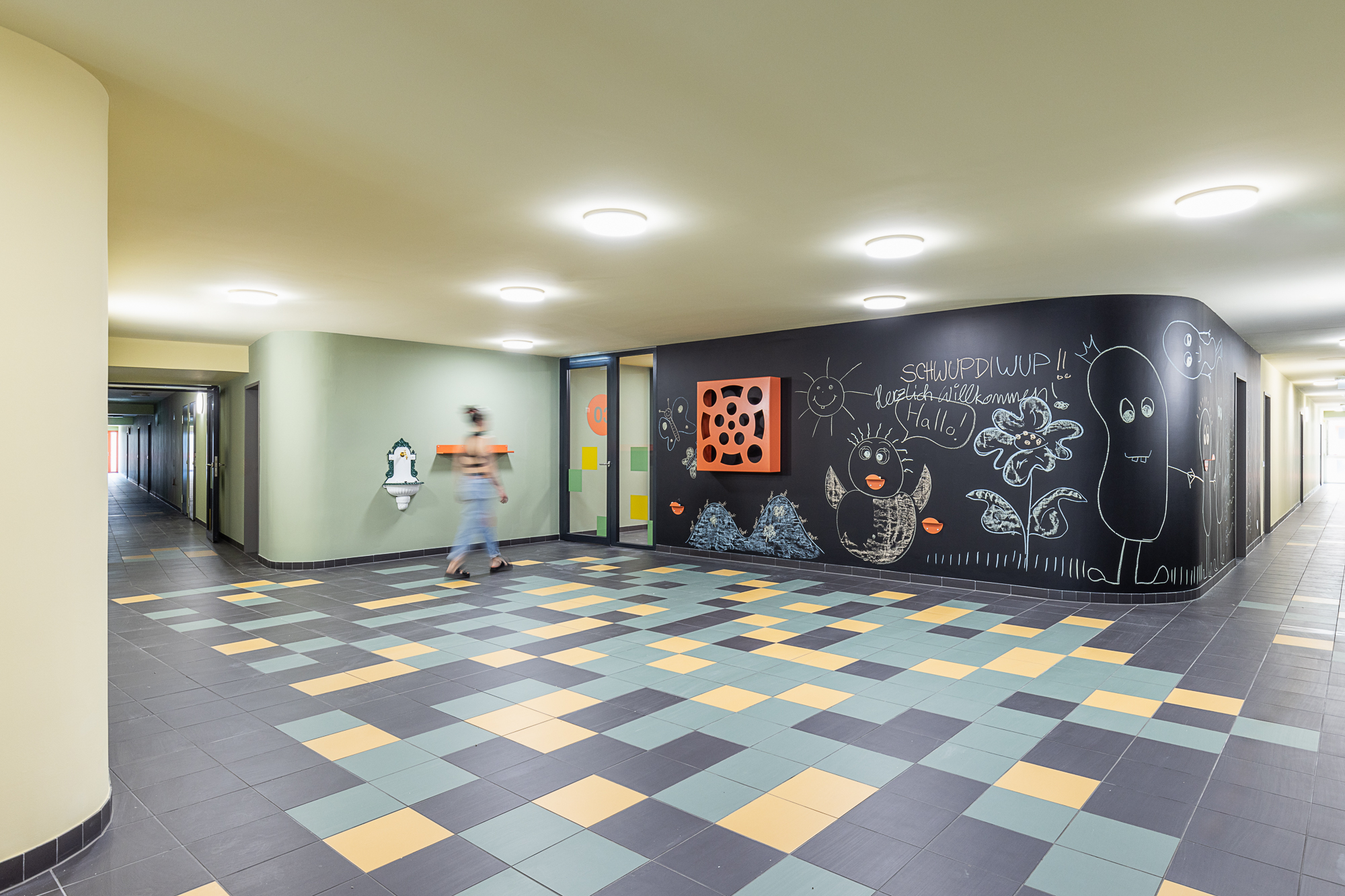
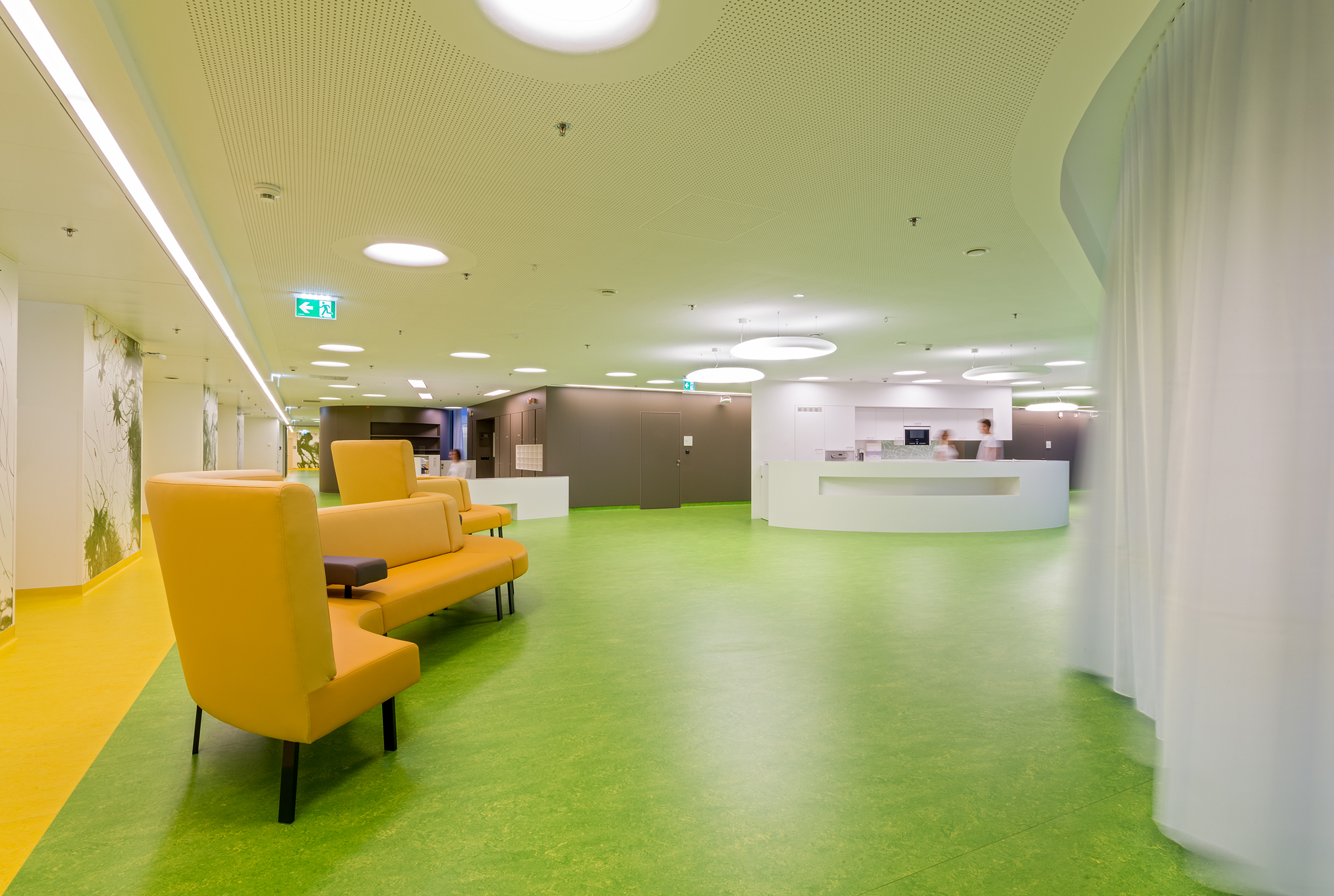
The ‘Bassena’ layout, once typical of Viennese housing, is being revived in our projects: corridors can be expanded into larger, open and communal social spaces. In spacious communal areas, “board games” integrated into the flooring or large blackboard walls encourage conversation, interaction and play: as a communication tool, they foster a very entertaining and uncomplicated way of socialising; from a design perspective, they often serve as extremely entertaining and varied eye-catchers.
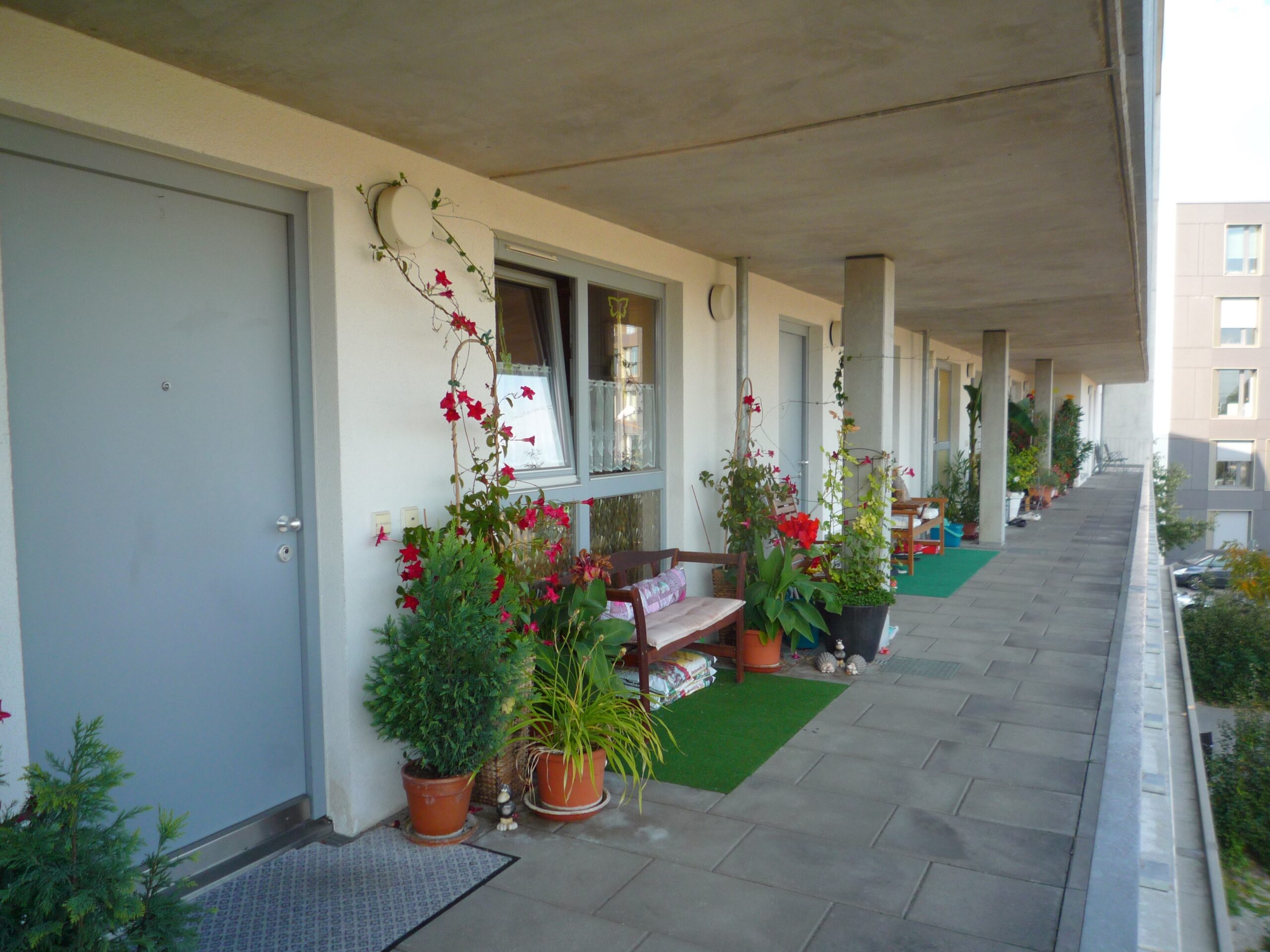
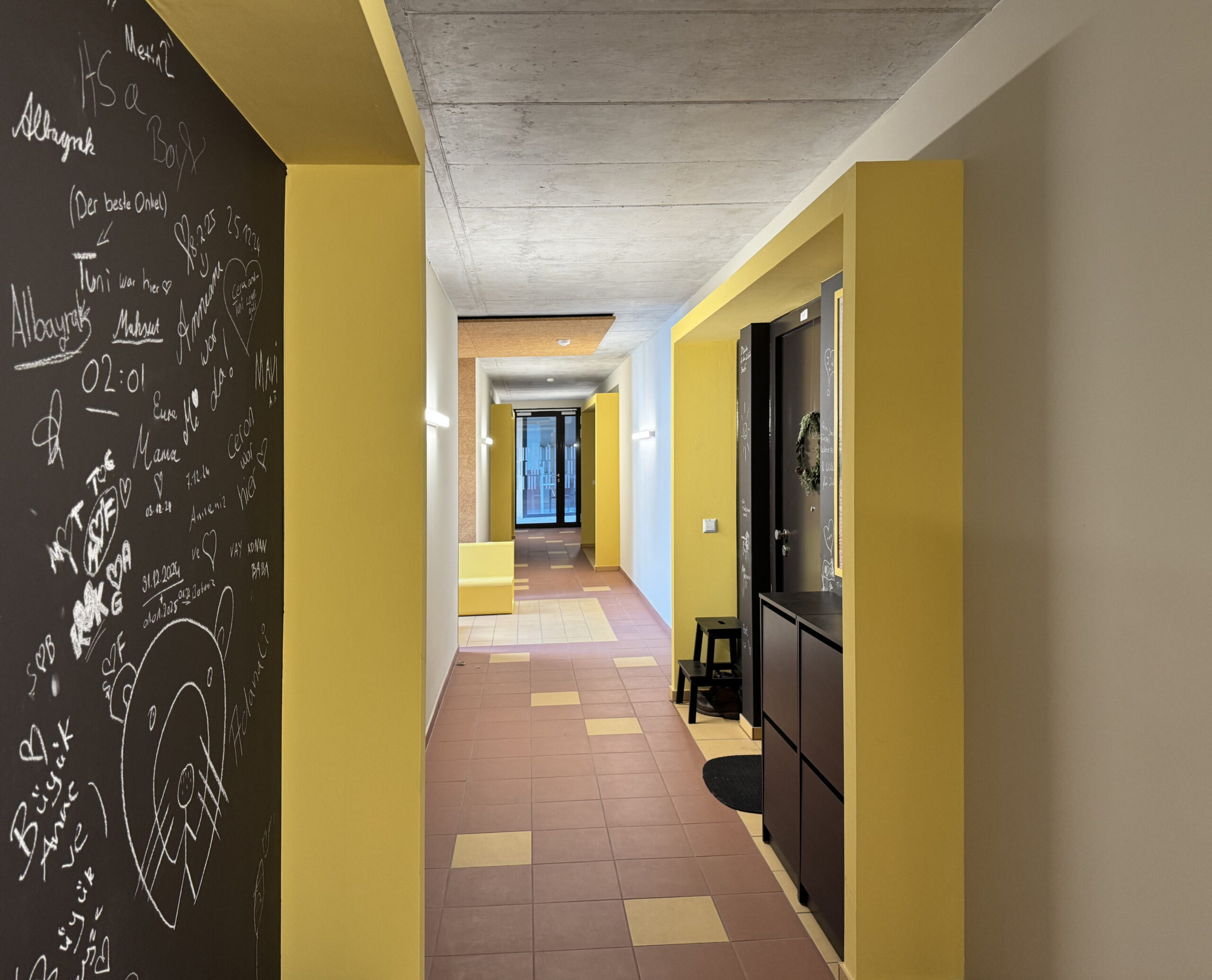
Another variation involves the creation of ‘apartment entrances’ – individual antechambers in front of the actual flats – through the use of recesses and extended corridors. These areas offer residents additional space to make the immediate living environment their own and to personalise it. This individual design not only increases the potential for residents to identify with their own flat, but also boosts interest in getting to know the person(s) behind the front door better. This replaces the doormat (previously the only means of individual expression and personalisation in front of the front door) with a built-in “calling card”.
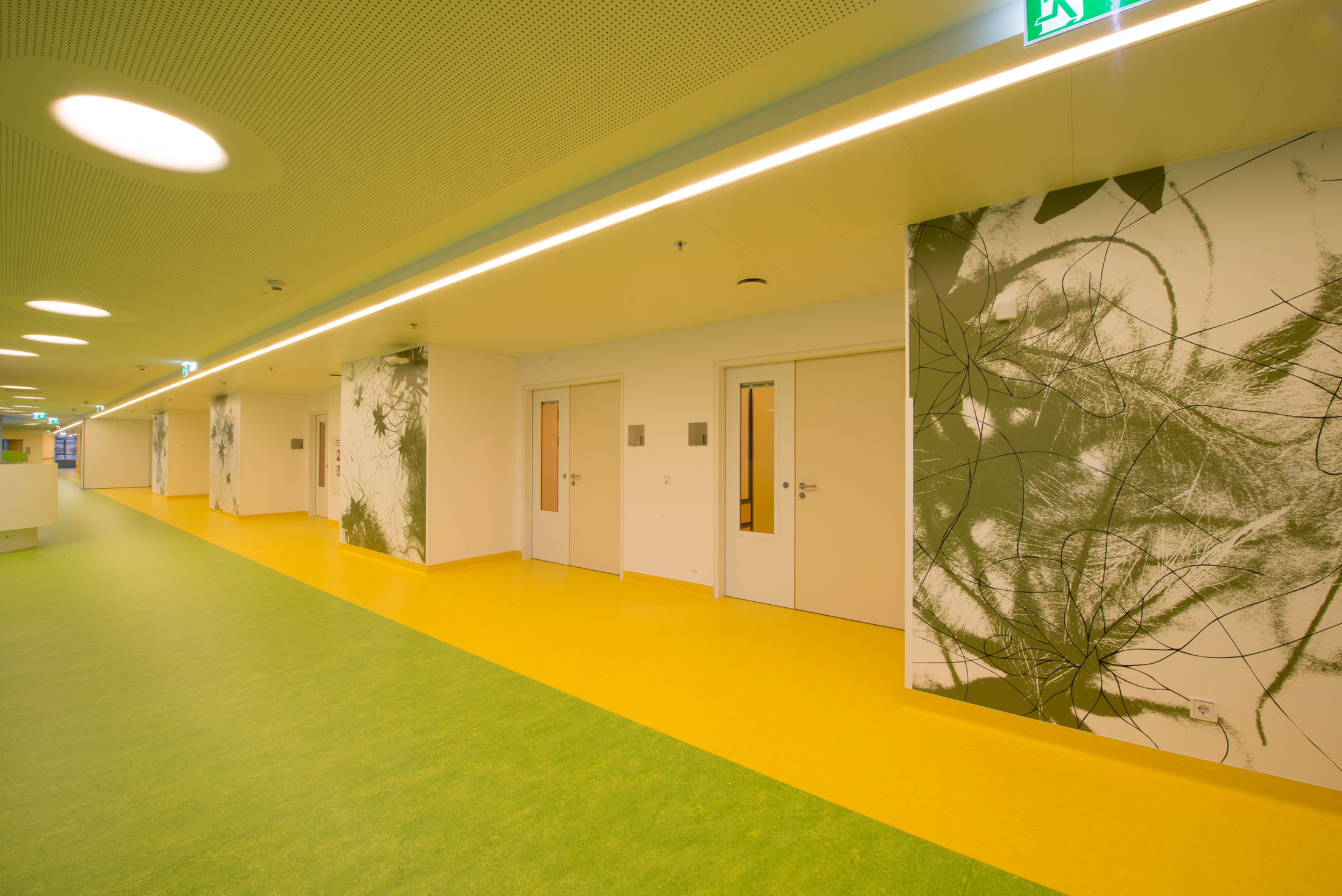
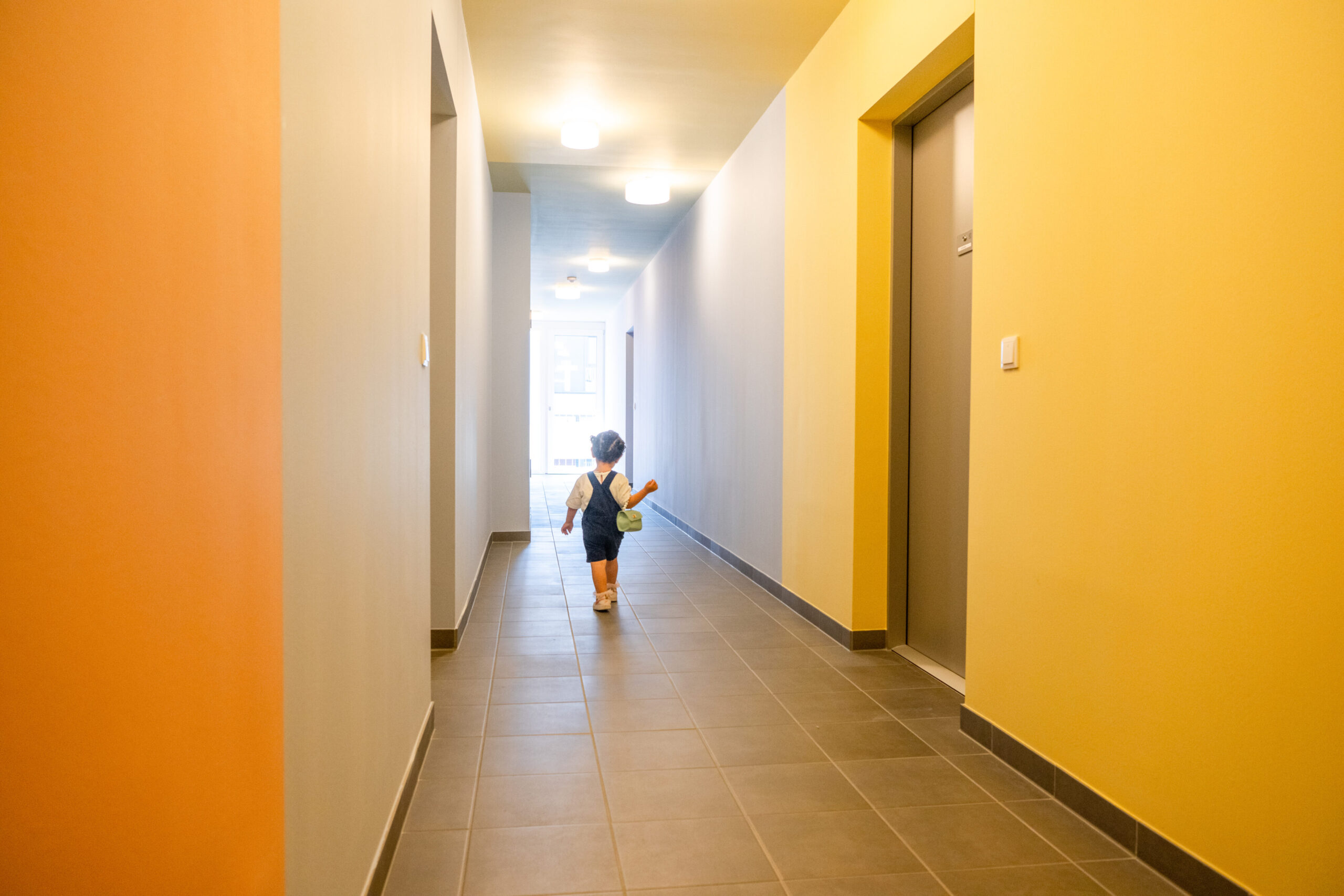
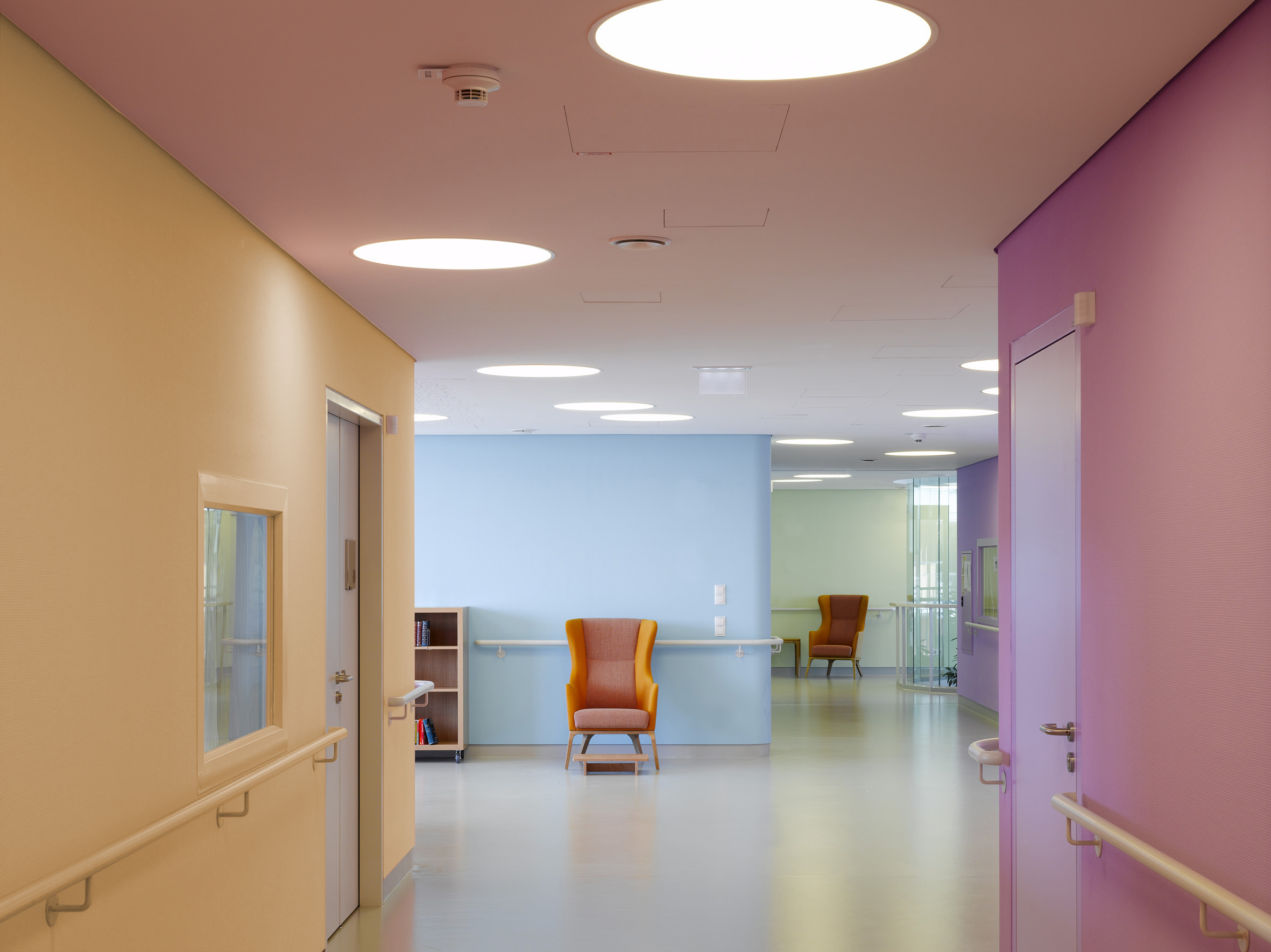
When it comes to the architectural design of traditional central corridors, criteria such as brightness, orientation towards light and good visibility are certainly key considerations for us. Even these primarily functional areas should already offer a pleasant atmosphere and reflect a certain degree of appreciation for the residents. A friendly and inviting colour scheme not only creates a pleasant sense of space, but also increases the residents’ sense of connection with their immediate living environment, extending beyond their own four walls.
external development
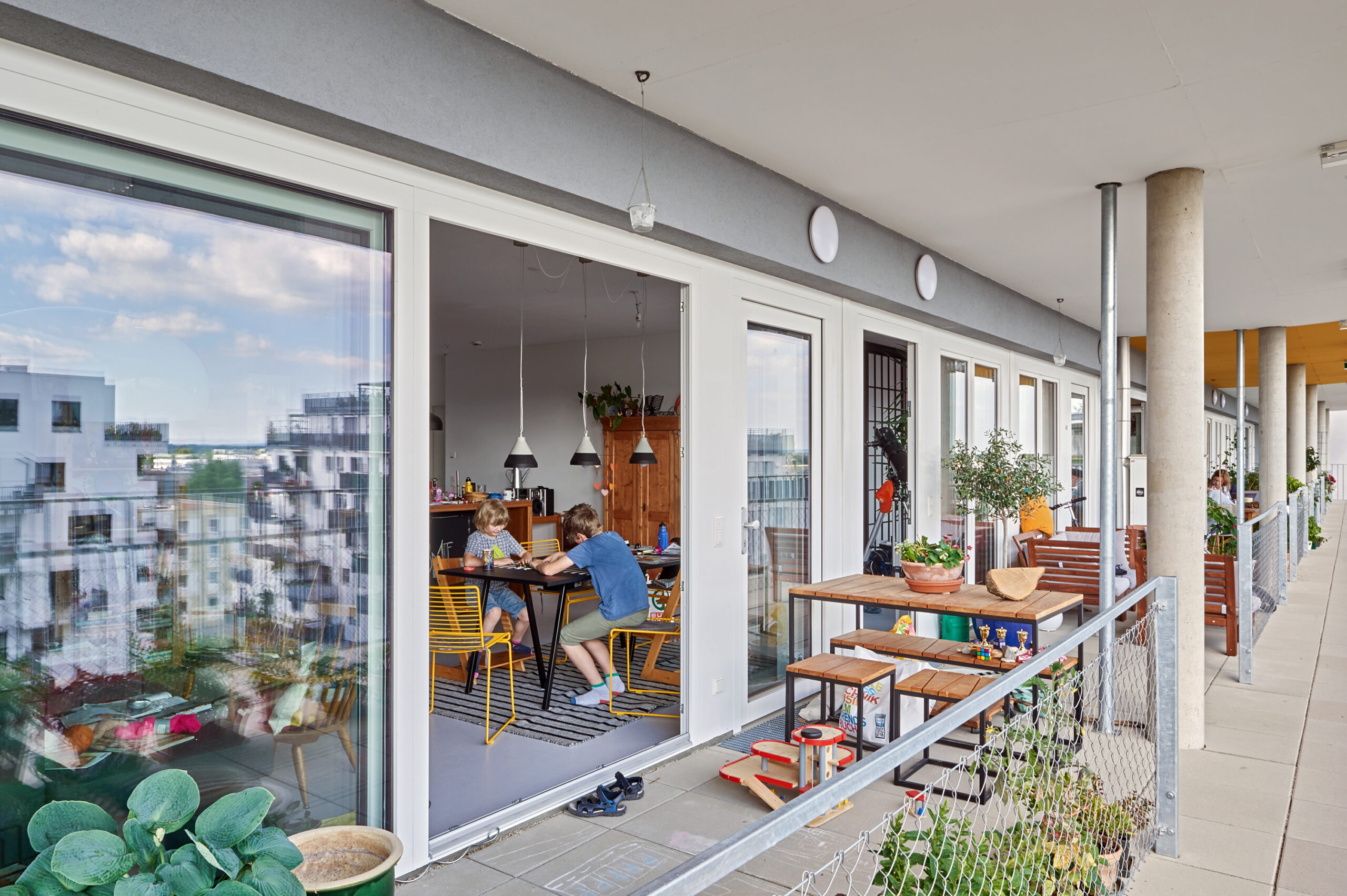
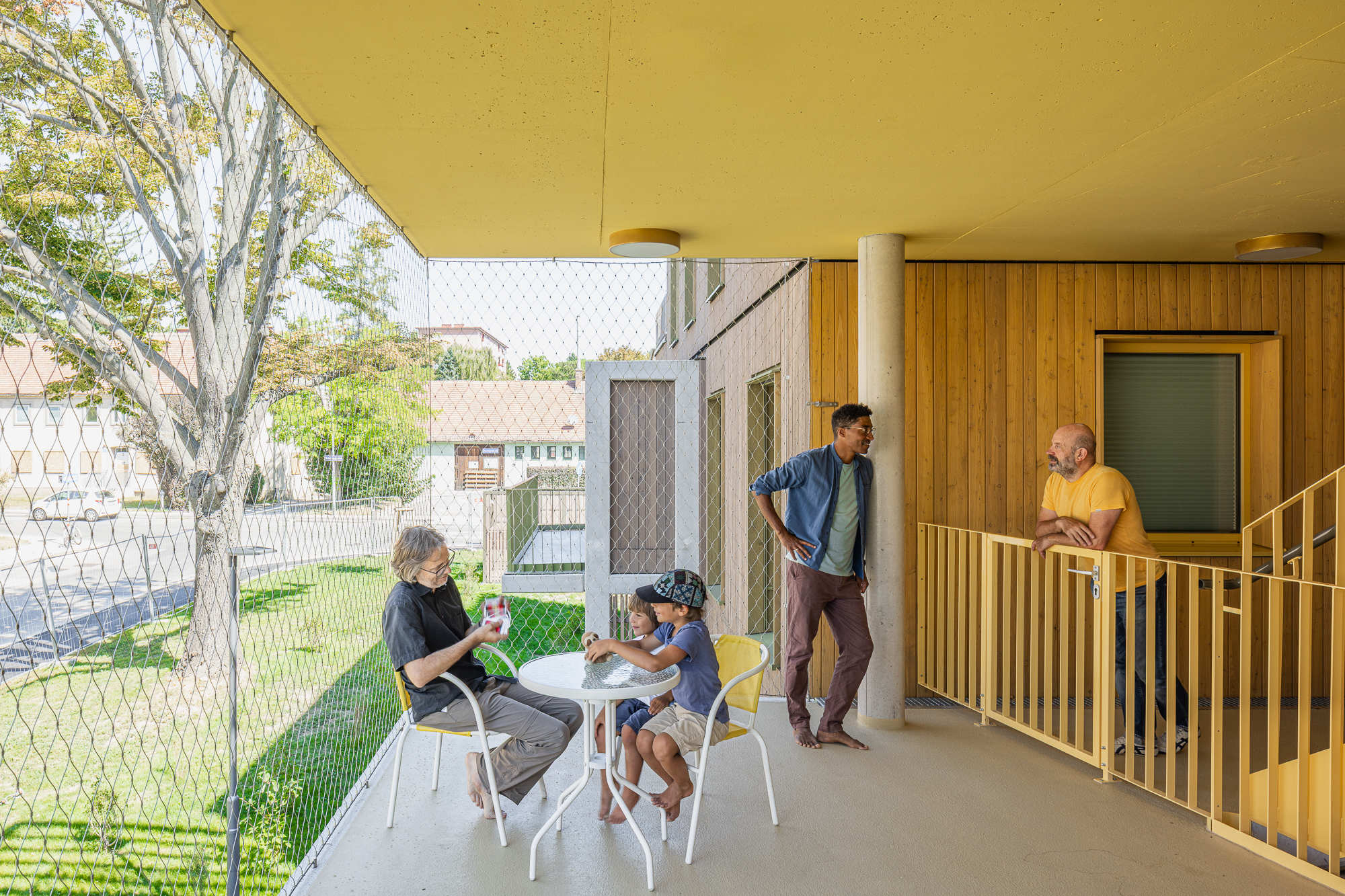
A tried-and-tested feature of Viennese housing design is the ‘Pawlatschengang’, which is constantly reinterpreted and refined in our projects. Thanks to its open nature and the seamless transition between private use and semi-public access, this pergola creates almost ideal conditions for neighbourly communication and social interaction. In practical implementation, this allows for the creation of finely tuned transitions and varying degrees of privacy between private and semi-public spaces.
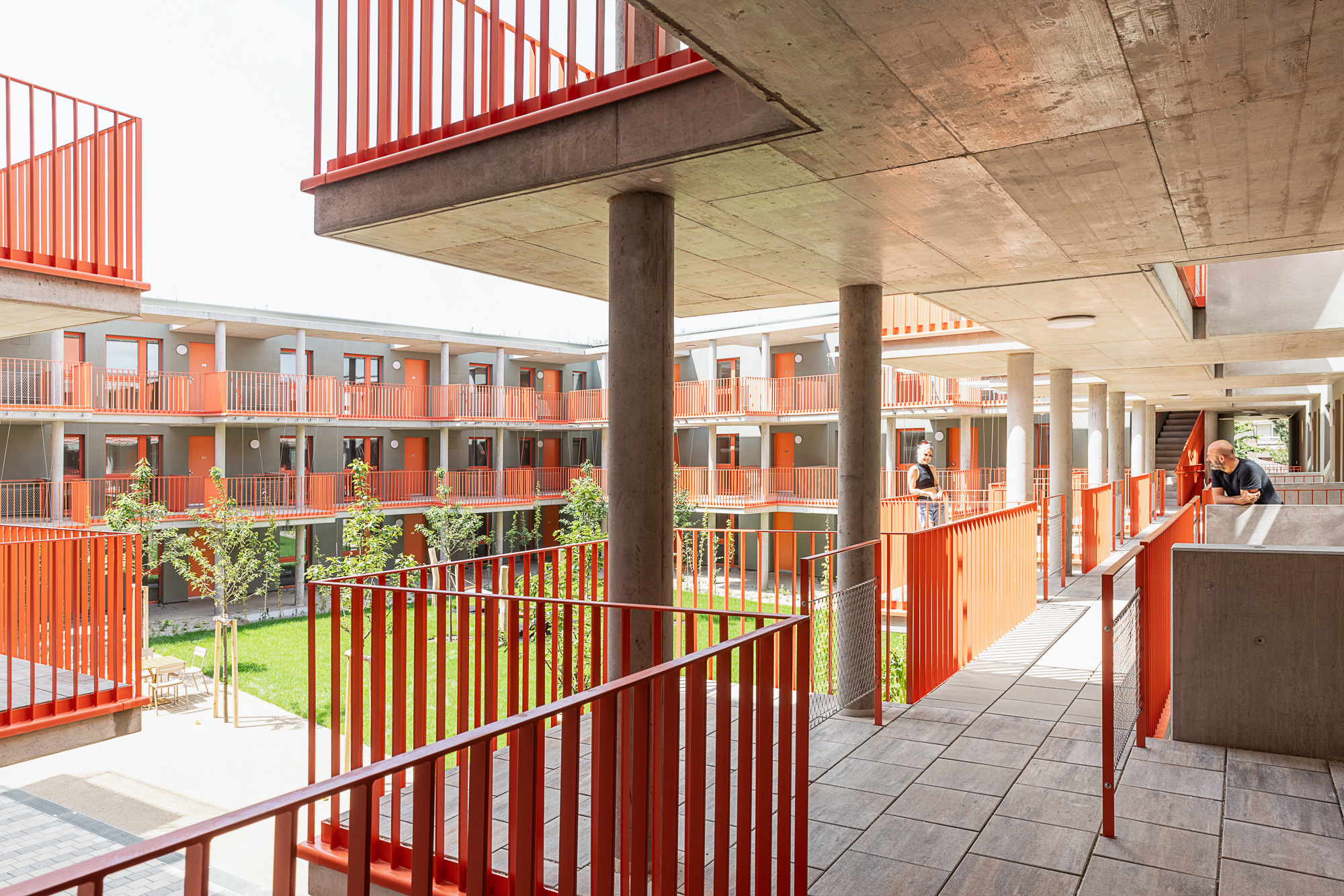
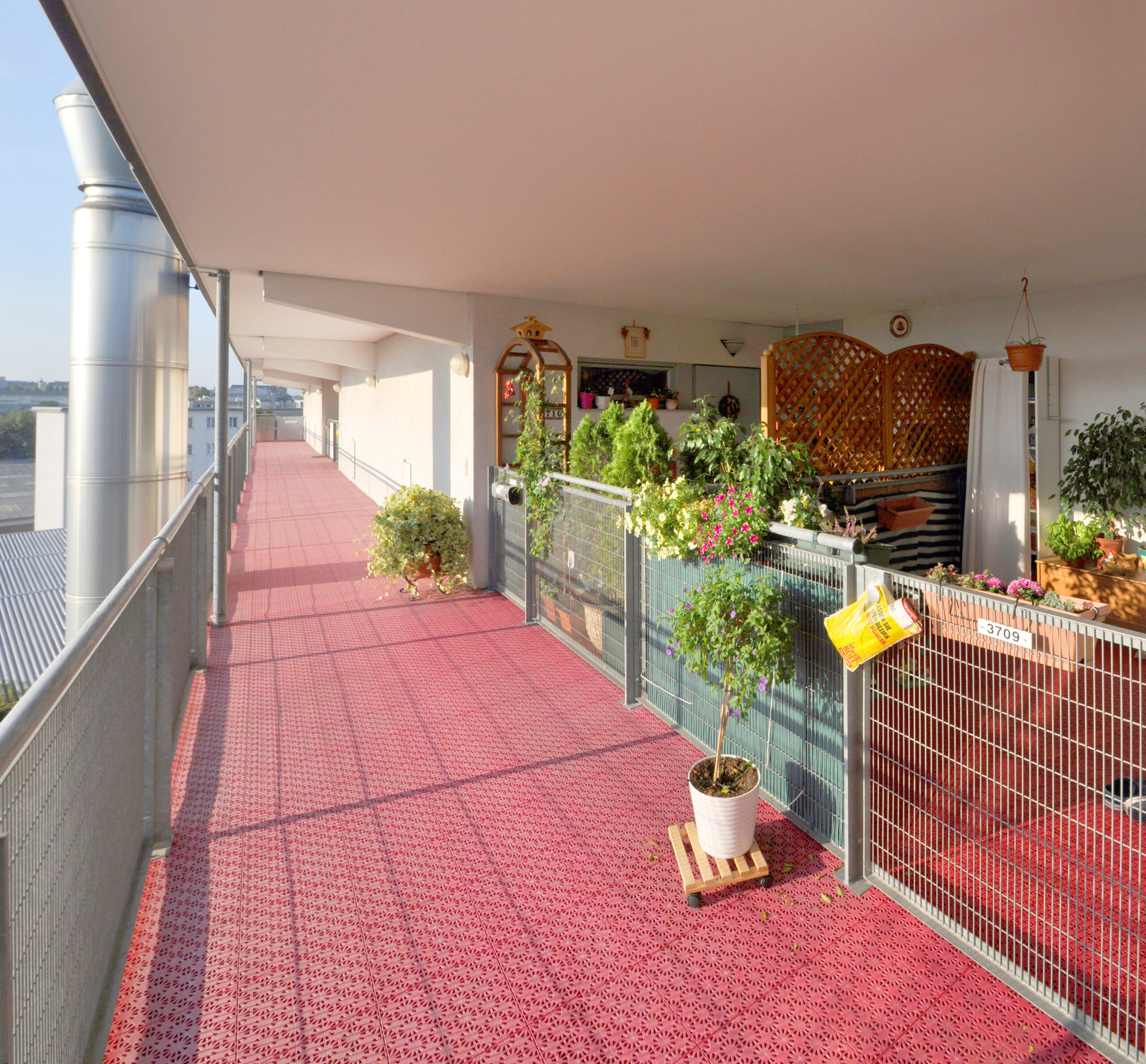
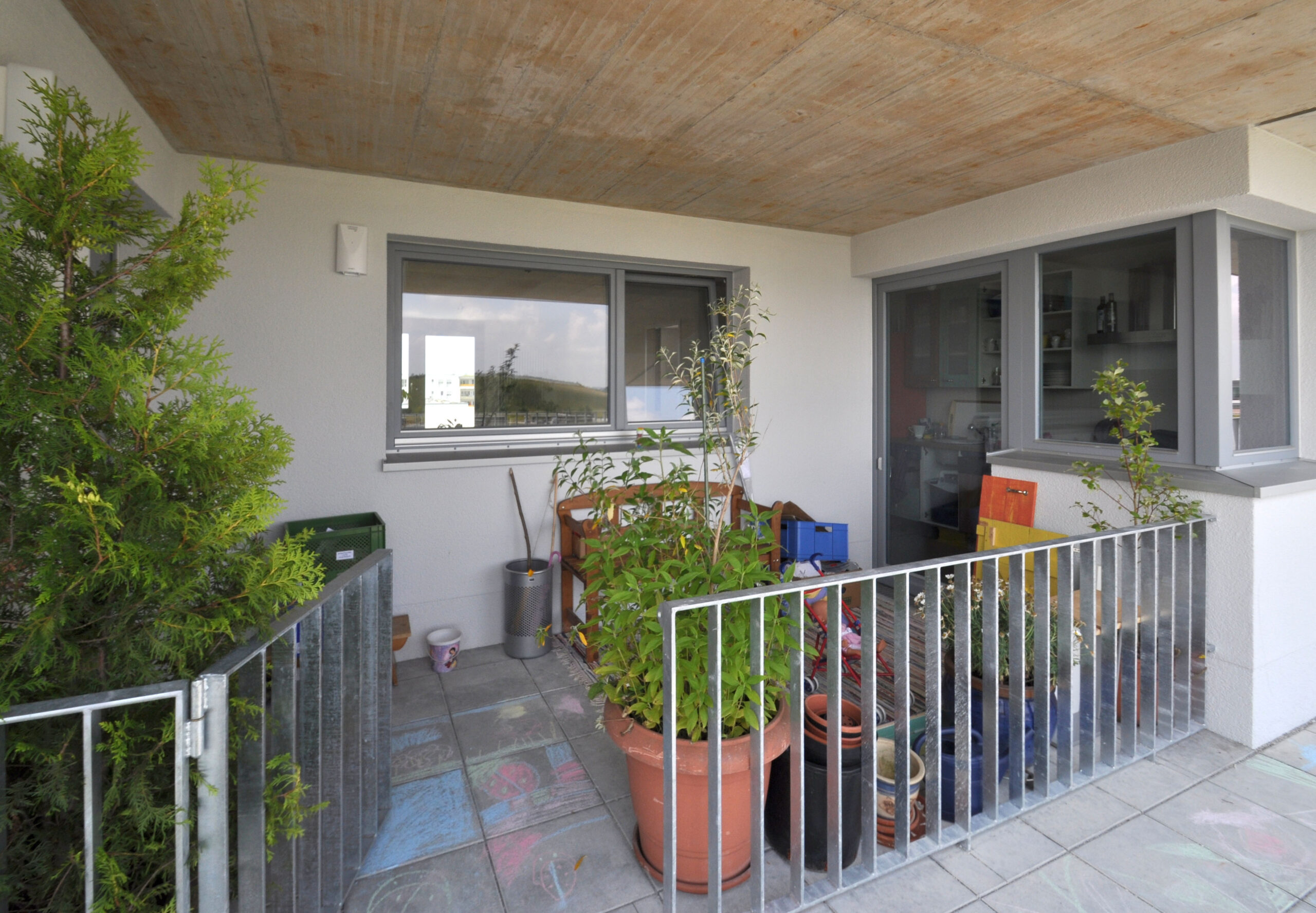
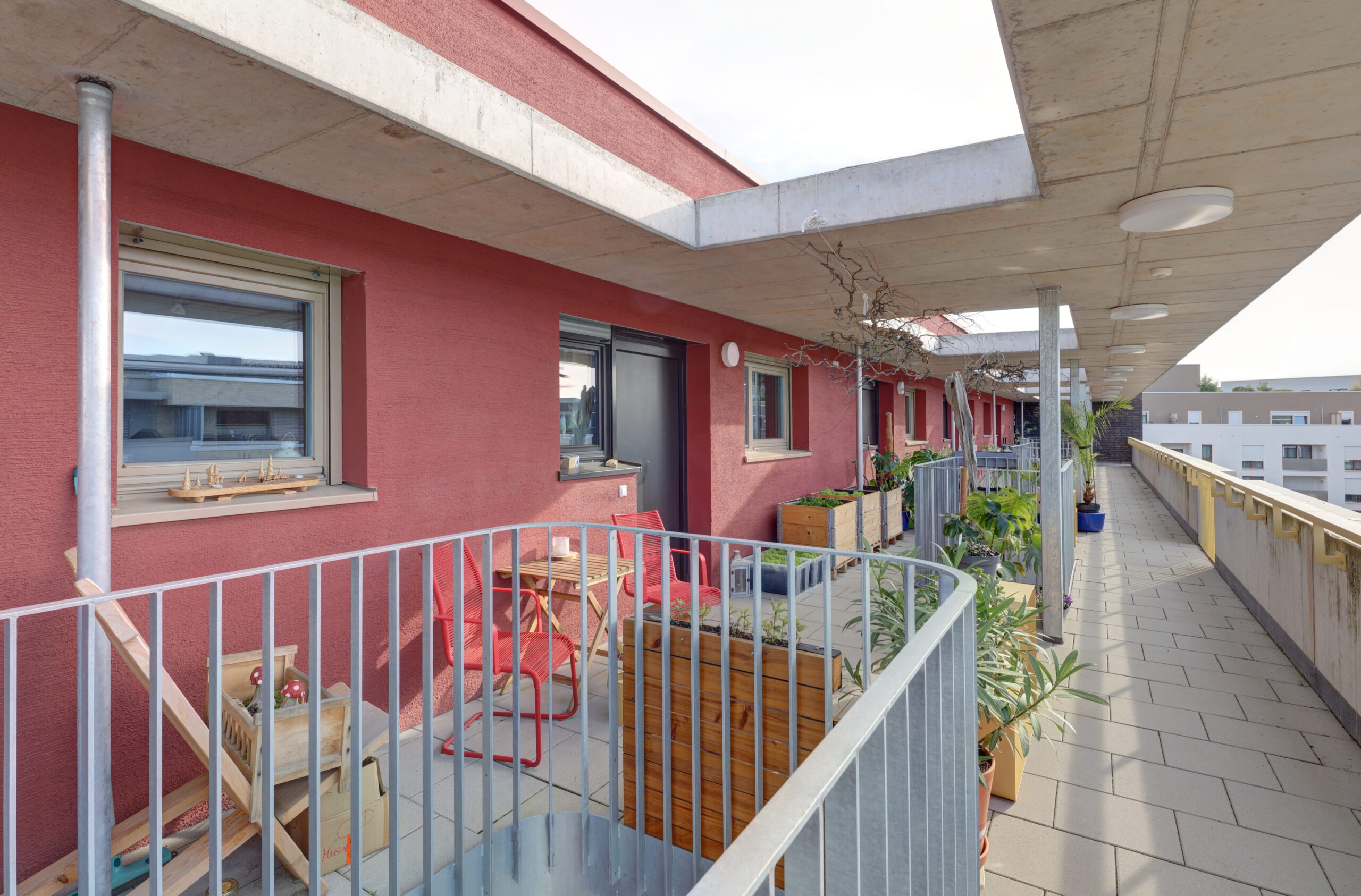
It is also possible to create a very close interplay between the private living area and the outdoor spaces. The boundary between the pergola and the private (entrance) area is now marked only by a slender fence; thanks to the continuous glazing of the living area facing outwards, the strict division between private and semi-public spaces is almost entirely eliminated across the entire floor by a transparent façade.